

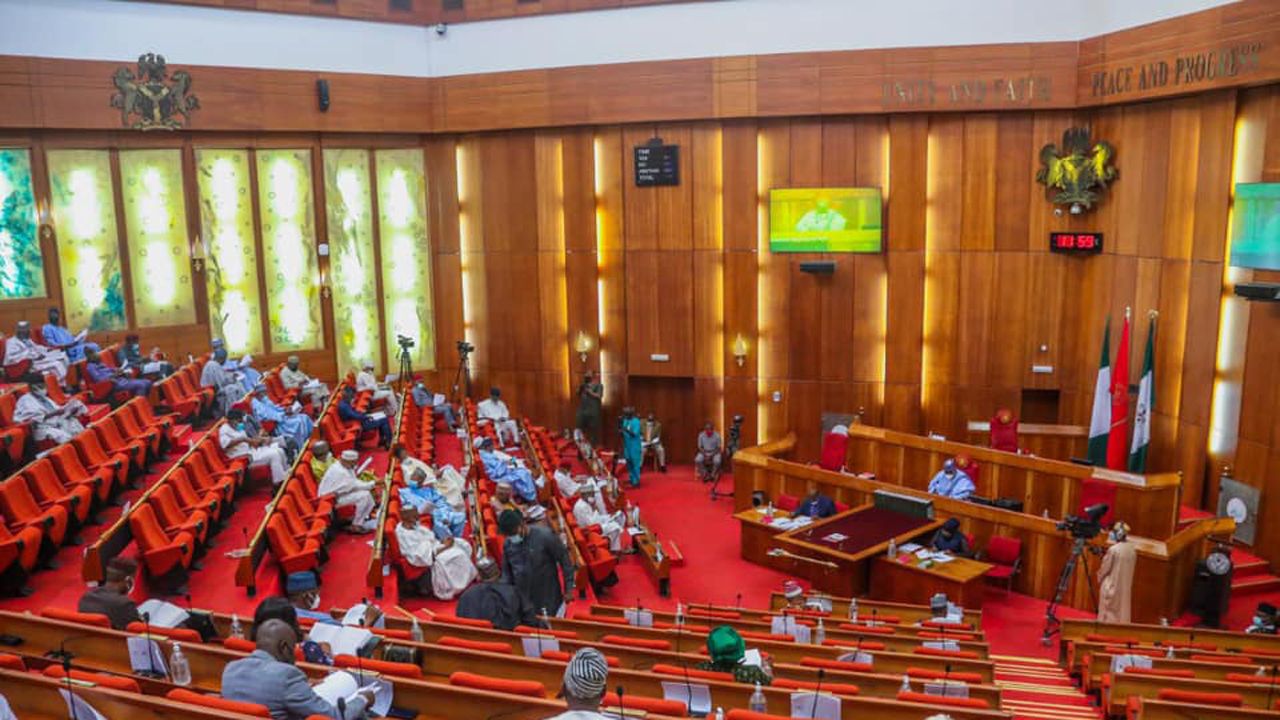
Until now, political parties in Nigeria have always had the freedom to choose the mode of electing their candidates for elective positions in general elections. This however, is about to change as the National Assembly on October 12, added a clause to the Electoral Act Amendment Bill 2021, compelling all political parties to adopt direct primary as the new mode of electing their parties' flag-bearers. That of course, is, if President Muhammadu Buhari assents to the Bill.
The inclusion of that clause into the Electoral Act Amendment Bill by the lawmakers have generated widespread reaction, with some people in support of the position of the National Assembly while others strongly against it.
Just what exactly is the attraction for the direct primary system? The direct primary system is that process whereby every card-carrying member of a political party votes for the candidates of their choice to represent the party in an election while in the case of indirect primary, it is the delegates, as opposed to all party members, that elect who becomes the candidate of the party.
The use of direct primary will go a long way in reducing the "wahala" of delegates list. We have seen cases where as much as three different delegates lists are submitted after conduct of primaries by a political party. With direct primary, every party member is expected to vote so no complaints about delegates list.
Direct primary will ensure citizen participation as all party members are involved just as it will reduce to the barest minimum, the interference of the judiciary as litigations will be reduced.
However, just as direct primary has its merits, it comes with its own bag of challenges. With all party members expected to participate, direct primary will be unwieldy and difficult to manage the hundreds of thousands of people; it will be time-consuming as its conduct may run into days and finally, it is capital intensive.
Like direct primary, indirect primary has its own merits and demerits. Indirect primary, which almost all the political parties adopt, is cost effective, easy to manage and less time-consuming. Its biggest flaw however is the fact that the delegates can be easily "hijacked" and bought over by party money bags who invite the delegates to their hotel rooms at midnight and "settle" them.
Some people argue that the issue of money bags inducing the delegates with money is neither here nor there because a delegate may collect money from a money bag and still vote his conscience.
Proponents of direct primary argue that it is transparent and as such would produce the best candidate. Such people forget however that the mode of election of flag-bearers for elective positions (direct or indirect) is just an aspect of the over-all electoral process. Let us assume, for instance, that a "good" candidate is elected through direct primary but the voting proper is marred by voter apathy, vote buying, rigging, ballot box snatching, tampering of result sheets, thuggery and widespread violence, probably leading to the death of some persons, would the proponents claim that such an election is free and fair, just because direct primary was used?
Basically, there is no big deal about what system is used, direct or indirect. According to the Independent National Electoral Commission (INEC) Resident Electoral Commissioner in Akwa Ibom State, Mr Mike Igini, "no method, direct or indirect, is inherently good or bad".
The way forward for credible elections is to employ every available means, including deployment of technology, to clean up the entire gamut of the electoral process and not just insisting on the use of direct primaries.
Little wonder therefore that Mike Igini said "unless members of political parties from top to bottom sincerely submit themselves to the due process they subscribe to, any hope for the success of whatever method they subscribe to will be a futile hope".
Again, if according to Igini, no method, direct or indirect, is inherently good or bad, why the insistence on direct primary when we are being told by key stakeholders that the cost for INEC to monitor the primaries of all the parties will run into billions of Naira? Such monies can be ploughed into other equally important areas.
Another important argument against direct primary is that it is against the tenets of democracy. We are told that democracy is about choice; the freedom of political parties to choose the form of election process that is best for them. Compelling all the parties to adopt direct primaries is taking away from them the fundamental power to freely decide the best form of election process that is best suited for them and this is unacceptable.
Fortunately, all hope in redeeming the situation is not lost as President Muhammadu Buhari has between now and Sunday, December 19 to assent or decline assent to the Electoral Bill. Fortunately again, Buhari is doing the right thing by consulting with stakeholders with a view to articulating their suggestions before deciding deciding to sign or not to sign the bill.
The president should be prevailed upon to return the bill to the National Assembly, requesting it to maintain the status quo of allowing political parties to decide for themselves, what mode of election to employ in getting their flag-bearers, before he assents to the bill. Allowing the prescription of the National Assembly to stand is tantamount to bringing back the days of Military President, Gen. Ibrahim Babangida, when in 1989, he created two highly unpopular political parties, the National Republican Convention and the Social Democratic Party and went on to prescribe manifestos as well as ideological inclinations for the two parties.
The decision of mode of electing flag-bearers is purely a party affair. The National Assembly compelling parties to adopt direct primary is not only a usurpation of the powers of the parties but it also amounts to the National Assembly limiting the political parties, and this should not be allowed.