


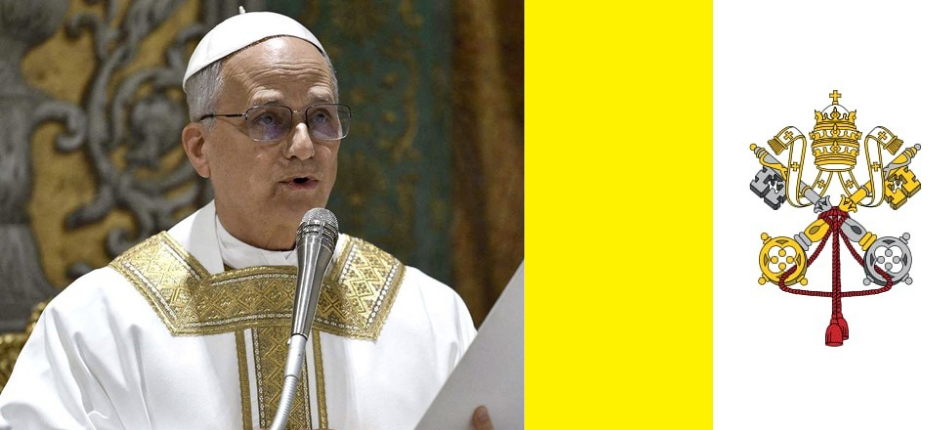
A new era for the Catholic church the world over began last week with the emergence of Robert Francis Prevost as the head of the church. Adopting the name Pope Leo XIV, the 69-year-old became the first pope from the United States of America and the first Augustinian Pope. His ascension to the exalted position marked a significant journey for all Catholics and reinforced the seamless transition and democratic process that the church is known for.
Pope Leo who was born on September 14, 1955, in Chicago, Illinois, to Louis Marius Prevost of French and Italian descent, and Mildred Martínez of Spanish descent was ordained a priest on June 19, 1982, at the Augustinian College of Saint Monica. He brings a fresh perspective to his new role, with a background that combines pastoral experience in Peru and administrative expertise in Roman Curia.
The 267th occupant of the throne of St Peter is described as gentle, calm, and decisive, with a unifying presence. His experience as a teacher, diocesan bishop, and member of the Roman Curia makes him well-equipped for the papacy. As it is expected, he will continue the reforms of his predecessor, Pope Francis' with a focus on the inclusive approach, prioritizing synodality and openness to diverse issues.
However, the new Pope faces significant challenges. At the core are cases of sexual abuse by clergy. He is expected to address ongoing scandals and restoring the trust that has somewhat disappeared because of that. He also needs to get to work immediately and implement the needed reforms to ensure transparency and accountability in the management of the Church's finances.
Another challenge before him is the issue of same sex marriage. Although his views on LGBT are unclear, some groups in the Roman Catholic fold, including the conservative College of Cardinals, believe he may be less supportive than Francis.
Pope Leo XIV had shown support for a declaration from his predecessor to permit blessings for same-sex couples and others in "irregular situations", although he has added that bishops must interpret such directives in accordance with local contexts and cultures.
The world today is facing global conflicts, and the new pope would also be expected to provide moral leadership in a divided world. If his speech during the inaugural mass in the Sistine Chapel is anything to go by, then it signalled his commitment to peace, unity, and bridge-building. Many would be watching closely his meetings with world leaders, including US President Donald Trump, when he begins to engage them in the pursuit of peace. It is hoped that such meetings will end in fruitful dialogue and reduce the current tension.
Pope Leo XIV may also need to confront leaders on other critical issues. This may bring a face-off between him and such leaders and their supporters. It is still unclear his stands on the issue of US immigrants, which the Trump government has been enforcing. But a social media account in his name shared a post some time ago indicating that he was critical of the deportation of a US resident to El Salvador.
On the issue of climate change, last year, Cardinal Prevost (as he was then) said that it was time to move "from words to action." He called on mankind to build a "relationship of reciprocity" with the environment. He has also spoken about concrete measures at the Vatican, including the installation of solar panels and the adoption of electric vehicles.
One obvious thing is the Pope's support for women to become Bishops. This is evident right from the time he supported Pope Francis' decision to allow women for the first time to join the Dicastery for Bishops, an administrative body that identifies and recommends future bishops to the Holy See. During an interview in 2023, he said, "On several occasions we have seen that their (women) point of view is an enrichment,". In 2024, he told the Catholic News Service that women's presence "contributes significantly to the process of discernment in looking for who we hope are the best candidates to serve the Church in episcopal ministry."
Certainly, the election of Pope Leo XIV offers a chance for renewal and growth within the Catholic Church. As he begins his papacy, he carries the legacy of Pope Francis and the expectations of a global community seeking guidance and compassion. His ability to balance tradition and innovation will shape the Church's future. But he needs all the support he can get. Not just within the Catholic community but across board.