


The recent killing of 14-year-old Kehinde Alade by a policeman in Ibadan, Oyo State, has reignited national concerns about police brutality and unprofessional misconduct in Nigeria. This incident is a stark reminder that those entrusted with protecting Nigerians are often the ones attacking them without provocation.
The late Kehinde, a secondary school pupil at Jislord High School, Ibadan, was being driven by his father alongside his brothers when the policeman shot at their car. The father of the deceased was said to have drove against traffic before the incident occurred. While that offence has been established, it was never a justification by the trigger-happy policeman to open fire on the vehicle in a complete show of reckless and excessive use of power.
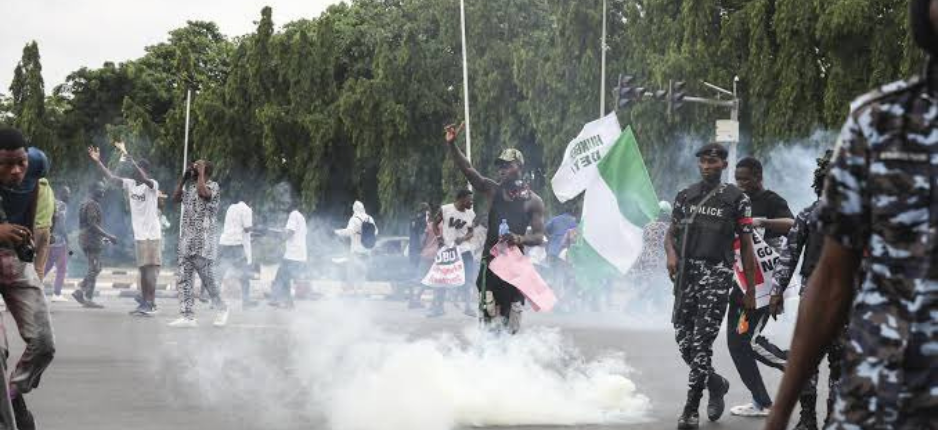
Just days before Kehinde's death, Ahenjir Emmanuella, a final-year student of Kwararafa University, was killed by a stray bullet from a policeman in Benue State. The police claimed the occupants of the car shot at them first, but residents took to the streets in peaceful protest, outraged by the unjust killing.
Although the late Emmanuella has since been buried, her sad end will remain very painful, and it is only when the killer cop is fished out and the full weight of the law takes its course that she can truly rest in peace. At least the authorities owe her that.
Similarly, in Yenagoa, Bayelsa State, some policemen allegedly shot and killed Daniel Ayama, a 27-year-old university student, and injured three others. The late Ayama and his friends were said to be returning from a birthday party when the sad incident occurred.
According to reports, an unmarked black Toyota Hilux vehicle had doubled crossed the Lexus 350 SUV Ayama, and his friends were riding in and opened fire on them. The police however, denied involvement in the killing and rather linked the death of the victim and the shooting of the three others to suspected case of intra-cult rivalry in the state.
Despite the police denying involvement, activist Martins Vincent Otse, popularly known as VeryDarkMan in a video posted on his social media platforms, refuted this claim, stating that the police were culpable in the incident. He said the unwarranted killing was a ploy by the police officers to escape being reported to their superiors after allegedly brutalizing an operative of the Economic and Financial Crimes Commission (EFCC) who was with the victims at the party.
These incidents highlight deep-seated issues within the Nigeria Police Force. Nigerians are harassed and subjected to inhuman treatment daily. The continuous brutality and killings of innocent and defenceless Nigerians indicate that the "police is your friend" cliché is mere rhetoric. On a daily basis and across major roads and highways in the country, Nigerians are harassed and subjected to all kinds of inhuman treatment. In various police stations, bail is still not free, even for the innocent. The police have also been accused of extortion, with officers carrying POS machines at checkpoints and demanding transfers to their accounts.
It is also obvious that the incidents that led to the Endsars protest in 2020 still exist. Then it was SARS now SWAT and other deadly units within the force. They have all constituted themselves as nightmares to Nigerians. It also goes to show that the promise of a complete overhaul of the force was not carried out. The police are meant to protect lives and property, but they have left that sacred duty to chase after internet fraudsters, also known as yahoo boys. Every young man with dreadlocks or driving a flashy car is a suspect of fraud.
To address these issues, far-reaching reforms are necessary. Some potential solutions should include raising the bar for recruitment. This would require police officers to be university graduates before enlistment. This could very well improve professionalism. Also, reviewing salaries of the rank and file to curb cases of extortion and corruption.
Police officers also need to be held accountable for their actions as this is crucial to rebuilding trust. The time to reposition the police force is now. Until meaningful changes are made, Nigerians will continue to live in fear of those meant to protect them.