


The federal government of Nigeria, is targeting a sum of $1bn agricultural investment and 500,000 from the Special Agro-Industrial Processing Zones Programme by the year 2027.
This is according to the SAPZ Fact Sheet obtained by Journalists today Sunday, 13th of October, 2024.
The federal Government in collaboration with several development financial institutions, including the African Development Bank, the International Fund for Agricultural Development, and the Islamic Development Bank, have kick-started an implementation process of the first phase of the SAPZ in seven states across the country.
SAPZ-1 is being implemented in the following states: Cross River, Imo, Ogun, Oyo, Kaduna, Kano, and Kwara states.
It targets $1bn in new investment from private sector companies within the agro-processing businesses and agricultural transformation centres, alongside 500,000 jobs disaggregated by direct and indirect age group and gender.
The National Programme Coordinator for SAPZ, Dr Kabir Yusuf, says that Federal Government has plans to construct and rehabilitate 190 feeder roads at farm levels, thereby reducing post-harvest losses within the catchment areas.
The statement also shows that 100,000 farmers will be trained and empowered in climate-smart agriculture by 2027.
The fact sheet estimates the total cost of SAPZ-1 at $538.05m, net of taxes.
It shows that, AfDB will provide an ADB loan of $160m (29.7 per cent of total cost), together with an Africa Growing Together Fund loan of $50m (9.3 per cent). The IsDB and IFAD will provide parallel co-financing of $150m (27.9 per cent) and $100m (18.6 per cent).
“Additional resources ($60m, 11.1 per cent) will be mobilised through the Green Climate Fund by IFAD from the IGREENFIN initiative. The Federal and State Governments will contribute $18.05 million (3.4 per cent) in both cash and kind"
"The AfDB will finance all SAPZ-1 programme components in Ogun, Oyo, Kaduna, Cross River, and Imo States. Under parallel co-financing arrangements, IFAD will finance activities under Component 2 of the programme in Kano and Ogun States and related management costs, while IsDB will finance activities across all programme components in Kano and Kwara States, as well as the Federal Capital Territory" the document stated.
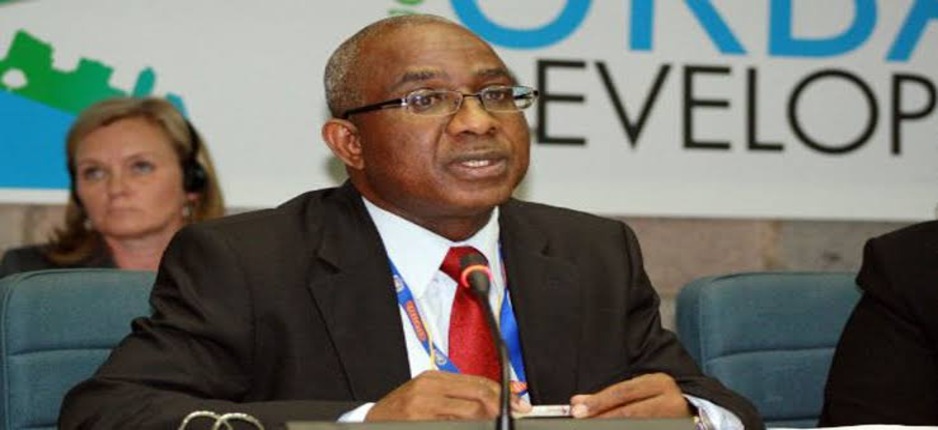
Adding his voice, the Senior Special Advisor to the President of the African Development Bank on industrialisation, Prof. Banji Oyelaran spoke on the human limitations affecting agricultural project execution in Nigeria.
“The most difficult issues we face are not technical but rather human interventions,” he remarked, noting that bureaucratic delays and personal egos often stalled vital initiatives.
“Sometimes it takes nearly nine months to resolve issues caused by a single individual’s reluctance to act" he said.
He explained that the SAPZ initiative, is designed to localize development and enhance agricultural activities.
Despite securing over $540m for the first phase, he raised an alarm that, disbursing the funds could hinder progress.
He further stressed on the need for knowledge sharing and dissemination among farmers, mentioning that, “Knowledge is crucial. If farmers don’t know the right planting times or techniques, they will struggle.”
Oyelaran remained optimistic, encouraging stakeholders to follow project guidelines and setting a compliance deadline of December 20.
“If anyone is not willing to obey the rules, they should just say it, and we will cancel their participation,” he warned.
He is looking forward to a future where agricultural initiatives could lead to substantial economic growth, stating, “Imagine employing 25,000 people at one site alone and multiplying that across the country.”
The coordinator further expressed optimism about the initiative’s potential to diversify and strengthen Nigeria’s economy through agriculture.
He said : “The SAPZ is a transformative project that aims to promote agriculture as a viable business rather than merely a way of life.”
Also speaking, the Permanent Secretary of the Ministry of Agriculture in Kano State, Sadi Ibrahim, stated that adherence to legal regulations remained a significant bottleneck.
“It is essential that we follow these guidelines to ensure successful project implementation in our state,” he stated, expressing commitment to mobilising resources effectively to meet project targets.