


A professor of Gynecology and Obstetrics, Prof. Akinyinka Omigbodun has said that the increasing urge to leave the country, especially by young people is a benefit and not a loss to Nigeria.
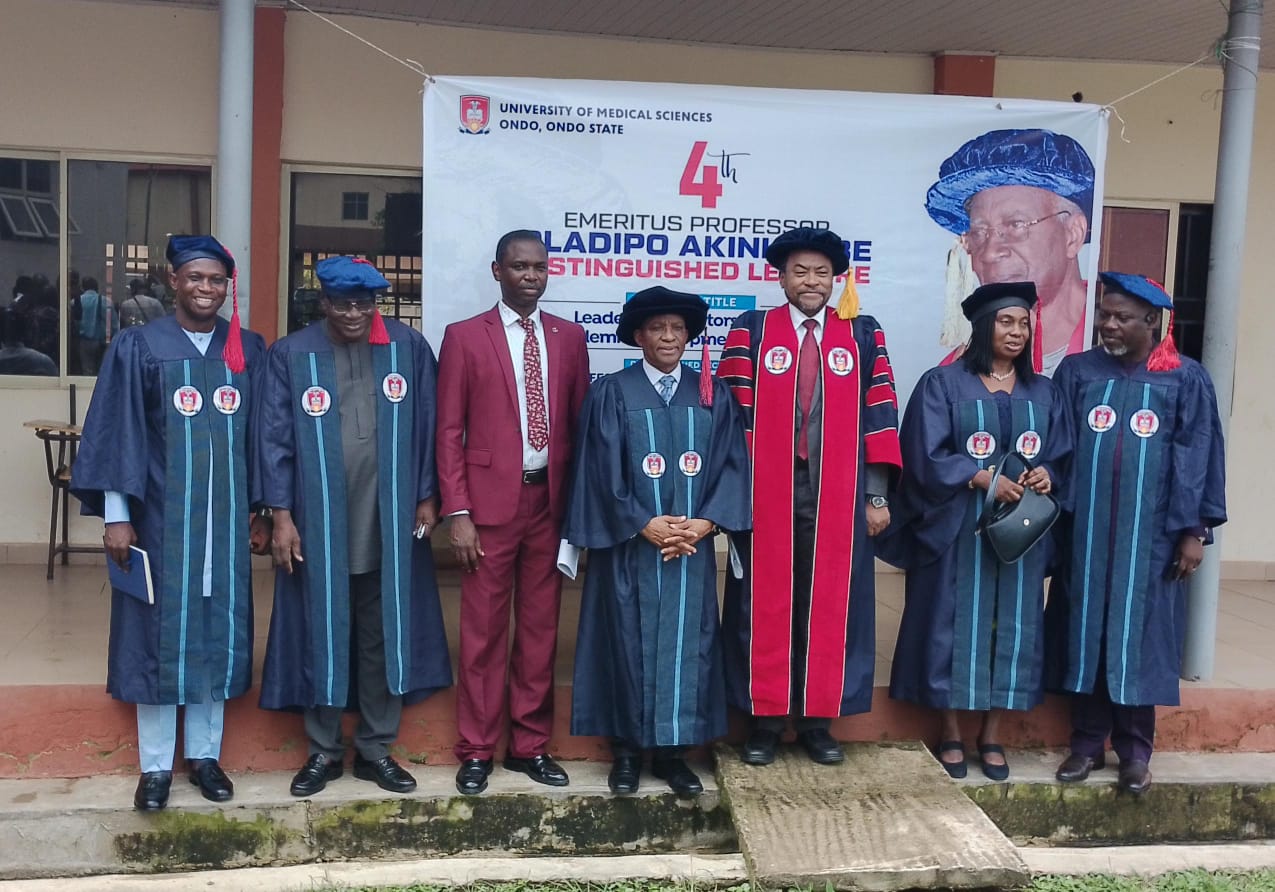
The former provost of the College of Medicine, University of Ibadan, stated this at the 4th Emeritus Professor Oladipo Akinkugbe Distinguished Lecture at the University of Medical Sciences, Ondo City, Ondo State.
The former President, West African College of Surgeons, explained that the mass migration has been driven by various factors, including economic opportunities and the pursuit of a better life.
Prof. Omigbodun said it is a net benefit and not a loss because the returned value of emigration is immense, noting that in most cases, the japa people become the sustainers and benefactors of their families, friends, and communities.
His words: "Migration from one part of the world to another has always been with us. Forty years ago, there was something similar with lots of professionals leaving the country to seek better opportunities elsewhere. You can't stop people from pursuing their personal welfare. So, definitely, when you have that kind of situation occuring, it's going to affect institutions, services.
"There was a time in my own academic department when the staff strength of about 12 dropped to about three that were left but gradually, we rebuilt. So, you can't hinder people who are seeking better opportunities for themselves but we can make things better here in Nigeria so that we can retain many of our professionals and intellectuals to help develop our own country and by the way, those who travel are not entirely lost to the system.
"I can tell you that many of them who are public spirited do give back in various forms. Some give money and other resources. Some give time. So, I don't just want to see it as people just moving away. Yes, it's a lost but there are opportunities of gaining back from those who leave."
He lamented the decay in infrastructure across tertiary institutions in the country, saying the presence or otherwise and the quality of the basic facilities that an educational institution requires to function will determine the productivity of the institution.
"It saddens me that a lot of infrastructures in our educational institutions are in a state of decay and it shouldn't be so and it's not a question of resources being unavailable, it's a question of application of what's available.
"You go to some counties which are not well endowed as Nigeria but where things are properly channeled, you find out that they maintain their infrastructure. We need to also build a maintainance culture so that our various infrastructures can serve us for long."
Accordingly, he said "although, government had done so much in funding education but government alone cannot finance education in Nigeria.
"There should be development of our educational systems and we aren't putting enough resources into our educational system. Government is also pretending that it can solely fund education. There is no where in the world where that happens. The process of finding education is combination of efforts.
"So, government has a role to play, the community has a role to play and those who are the direct beneficiaries also have a role to play. We all need to bring our resources together. And when when we do that coupled with sound leadership, then, we will get the necessary development."
Prof. Omigbodun who spoke on the topic: 'Leadership, Mentorship and Academic Development in Nigeria', said Nigeria needed true and patriotic leaders such as Tafawa Balewa, Nelson Mandela, Julius Nyerere, and Obafemi Awolowo, who fought colonialism and apartheid and promoted social justice.
"It is also the product of followership, so, all of us must strive to be better leaders. If everybody is doing his own bit in a corner, I can assure you, as a nation, we will develop. Every nation in the world battle leadership problems and Nigeria isn't different. There are leadership challenges at the national, state and local level and even in community and a situation that changes from time to time is also incumbent on the followership to support the leadership.
"I noticed that a lot of people just spent efforts disparaging leadership. Sometimes altering curses on the leadership. There is no way that can go well for the population. If we are all doing well, it doesn't matter who the leader is whether in the local, state or national level, if all institutions across the nation are well governed, I can assure you that Nigeria will be a much better place.
"It is not until you protest on the street before you get your feelings known, so, it's a good thing if something is not being done properly for the followers to make their feelings known so that correction can be made and a responsible and listening leadership will do well to listen to what their followers are saying."
Speaking on the cholerae outbreak in Nigeria which has claimed over 40 lives, he said "Infectious diseases like cholerae particularly one that is spread through food and water is more a product of community education and people willing to follow the simple rules of hygiene and it we all do our part, something like cholerae will not have a place in our society.
"For example, if we prepare food in a hygienic way, we make sure that the water we are drinking is wholesome, portable, then, cholera will go away but if those things are absent, there is a problem. In this country there is still much for government to do in terms of provision of portable water but even where that is not yet available, people have a personal responsibility to take care of their own individual hygiene and I think what we need to do more of is educate the people.
"If people don't develop cholerae, they won't go to health facilities, by the way, when they get to the facilities, many of them are very ill. So, it's better to prevent than to start making an attempt to cure."
Earlier, the Vice Chancellor of UNIMED, Prof Adesegun Fatusi said the lecture was aimed at promoting the legacy of excellence as epitomised by late Akinkugbe, one of the most distinguished academicians, medical teachers and leaders in the history of the country.
He noted that the lecture has over the last three years focused on different dimensions of the legacy of Prof. Akinkugbe which includes, among others, research, teaching and clinical services, stressing that Akinkugbe played key leadership roles within the health profession, education landscape and the Nigerian university system, leaving behind a legacy of impactful mentorship.