

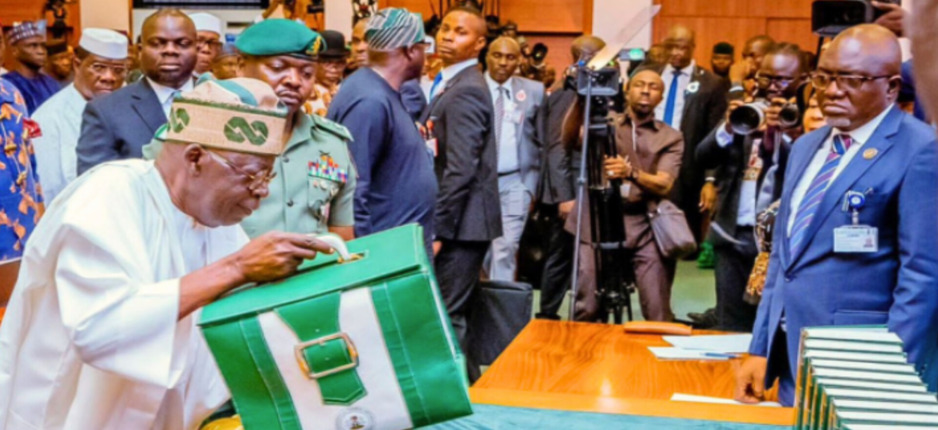
Last Wednesday, President Bola Tinubu presented the 2025 budget proposal of N49.70tn to a joint session of the National Assembly allocating N4.91tn to Defence and security and the sum of N4.06tn for infrastructure, targeting big ticket projects like the Lagos-Calabar Coastal Highway and the Sokoto-Badagry Highway.
The ambitious budget titled “Budget of Restoration: Securing Peace, Rebuilding Prosperity" also has a projected deficit of N13.39tn, which, according to the President will be financed through borrowing. Tinubu explained that the approach is necessary for his government to achieve its plan of massive development.
It was very cheering to hear education and health, two critical sectors got N3.52tn and N2.48tn, respectively. Tinubu had explained that the allocated sum to education will be used to fund the Universal Basic Education and nine new higher institutions, while that of health will seek to improve healthcare systems and provide essential drugs for public hospitals across the country.
Another cheering thing about the budget was the provision to empower young Nigerians, which the president emphasized will be part of his administration’s human capital development strategy for 2025. This will definitely excite the army of young people seeking more government intervention to make their lives better.
While the budget brings some hope for an envisaged socio-economic revamp, there are, however, concerns that financing the budget deficit of N13.39tn, representing 3.89 per cent of Nigeria’s Gross Domestic Product through borrowing is scary. This is because of the current debt profile of the country, which stands at N134. 297 trillion as of the second quarter of 2024 (June 2024) according to the Debt Management Office (DMO).
We think that it is economically wrong for the government to earmark N15.81tn for debt servicing in the budget and then still be planning to go and borrow more. Rather, the government should put in more efforts to improve non-oil revenue streams. Then, it also cut down the outrageous amount that has been earmarked for some items.
For instance, allocating a total of N6,364,181,224 billion for the renovation and rehabilitation of the residential quarters for the president and his vice as well as some of their aides is ridiculous. Even the sun of N5.49bn for the annual maintenance of the Presidential Villa is worrisome and unacceptable. Is the villa and the residential quarters so deplorable that they need such a humongous amount for rehabilitation?
In this difficult period of extreme hunger, where people are dying in stampedes because of rice palliatives, budgeting N3.66bn for the purchase of State House operational vehicles and N1,09bn for the replacement of SUV vehicles at the State House is another sad commentary of the proposed budget for next year.
It also beats our imagination why those who prepared the budget made provisions for the funding of all development commissions but left out that of the South-South Development Commission. If this is deliberate, we want to believe it was done because the commission is yet to get the needed assent. However, this position should be made clear to avoid an upheaval from that part of the country. We hope that the omission should be addressed before the budget comes into effect or that supplementary appropriation is made to correct it early next year.
We also advise that despite the budget's optimistic outlook, some of its underlying assumptions should be properly reviewed. The hope that crude oil production will increase to over two million barrels per day, and that the budget aims to reduce inflation from its current rate of approximately 30% to 15% and lower the exchange rate from about N1,700 per USD to N1,500, may end up disastrous if the government does not provide a buffer.
It is, therefore, imperative to prepare for less favorable outcomes as the targets, though ambitious, require realistic contingency planning. The lawmakers must save the situation by scrutinizing the budget thoroughly. We want a budget that will work for the people and bring about economic stability, growth, and prosperity.