


Despite its role as the economic backbone of Nigeria, the downstream segment of the oil sector remains curiously underdeveloped. Nigeria is no doubt the largest producer of crude oil in Africa, but having four major non-functional oil refineries and the stagnation in the downstream sector is significantly contributing to widespread economic hardship and poverty among Nigerians.
These refineries including, Warri Refinery, Old Port Harcourt refinery, New Port Harcourt refinery and Kaduna refinery have remained dormant and unproductive, despite the huge amount of money spent on their refurbishment and maintenance in past years.
The Warri Refinery and Petrochemical Company (WRPC) is a 125,000-bpd capacity constructed and commissioned in 1978 at a cost of around $478 million. The refinery has never reached its full capacity operation mostly due to mismanagement, poor maintenance and outdated technology. Needless to say, the refinery is in a state of maximum disrepair. In spite of a contract for repair of about $897million that was awarded to Saipem SPA by the Federal Government in 2021, the refinery still remains defective and counterproductive.
The Old Port-Harcourt refinery, built and commissioned in 1965 with refining capacity of about 60,000 barrels per day was constructed by Shell BP at a cost of £12million. The Federal government awarded the repair of the refinery to an Italian company, Tecnimont SPA in March 2021. It was announced last year by the Minister of State for Petroleum Resources (Oil), Sen. Heineken Lokpobiri that the mechanical segment of the refinery has been completed. Obviously, production has not been ongoing since the time of the announcement.
Read Also: https://nigerdeltaconnect.com/fraudsters-hack-akwa-ibom-govs-whatsapp-number
The New Port-Harcourt refinery was commissioned in 1985 by the Federal Government and built at a cost of $850million. It was said that the refinery has the capacity to refine 150,000 barrels of oil per day and later increased to a refining capacity of 210,000 per day. Current observations have shown that its refining output has dropped exponentially. A point to consider is that the refinery was part of the $1.5 billion maintenance contract, awarded by the federal government to Tecnimont SPA in 2021.
Kaduna refinery– With a capacity of 110,000 barrels per day, was built in 1976 at a cost of $525million. Just like other government-owned refineries, it’s in a state of comatose and at its utmost inactivity. $586million was approved for the maintenance by the federal government in 2021 but the story is not so different from other nonfunctional refineries.
The Nigerian National Petroleum Company (NNPC) Limited has postponed the eagerly-anticipated launch of the Port Harcourt refinery for the sixth time, raising doubts about government owned refineries not beginning operations this year.
It is intensely unfortunate that the country is rich in crude oil but distressed in refined products which has led to over dependence on imported oil products. Crude oil is the heart of the Nigerian economy and yet the downstream sector remains one of the most underdeveloped sector. Earlier this month, the Minister of Finance and Coordinating Minister of the Economy, Wale Edun revealed that Nigeria spends $600million monthly on the importation of fuel. The National Bureau of Statistics (NBS) also stated that the country’s petrol import has been minimized to an average of 1billion litres per month after President Bola Tinubu abolished fuel subsidy on May 29 last year. The Chairman, Presidential Fiscal Policy and Tax Reforms Committee, Taiwo Oyedele, stated on January, 2024 that the federal government will save N8 trillion annually from fuel subsidy removal.
Despite all these, majority of Nigerians are grappling with high cost of living saying there are no benefits to the removal of fuel subsidy. Nigerians are rather impoverished with prices of goods and services skyrocketing habitually with inflation rate as high as 34.19%. The Naira constantly depreciating against the dollar, hovering between N1, 500 and N1, 700 per dollar. Petrol pump price keeps increasing as filling stations adjust their pump prices on a daily amid fuel scarcity.
Complicating this matter is the issue of deep-rooted corruption and selfish agendas of some political elites benefitting from the import of fuel products and sabotaging the rejuvenation of local refineries. Former President of Nigerian, Olusegun Obasanjo earlier stated the involvement oil cabals who are responsible for frustrating the $20 billion Dangote Refinery, which has been in loggerheads with NNPCL and other multinationals. Dangote refinery has been entangled with international companies in Nigeria complaining about issues surrounding crude oil supply.
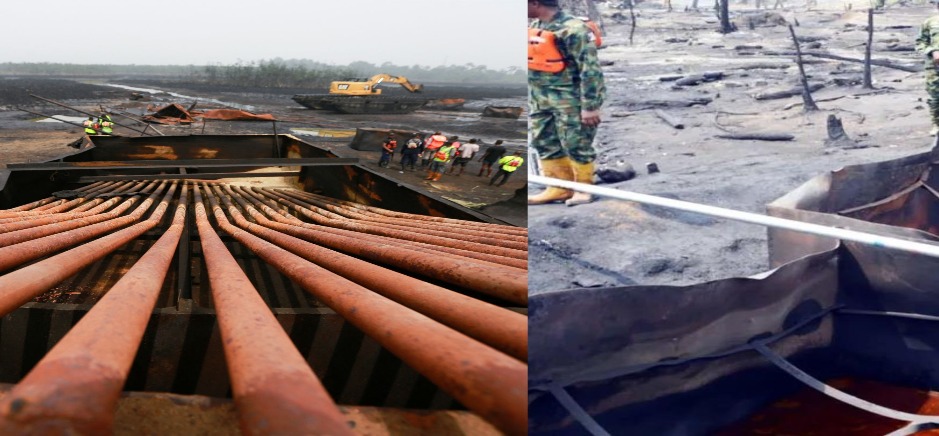
All over the country largely in the Niger Delta, illegal refining sites are being destroyed. However, analysts of the opinion that instead of tearing apart these refineries, they should be made to contribute to the output of fuel production by intensely examining, supporting, regulating and supervising their operations for clean fuel products and to meet the country’s energy demand. They should be properly licensed and also be made to pay taxes which would also boost the country’s internally generated revenue. This move would also create job opportunities and reduce activities of criminal-minded individuals.
The Tinubu-led administration should consider collaborative engagements of these illegal refineries in addition to the few modular refineries and Dangote refinery while working on revitalizing government owned refineries. This should drastically reduce the pump price of Premium Motor Spirit to about N500 per litre which will in turn reduce the cost of living for Nigerians.
There should also be polices that would minimize the influence of some international bodies’ that weaken Nigeria’s local refining competence. The Government should strictly monitor funds allocated for the repairs and maintenance of refineries. This would prevent individuals and companies who intend to frustrate effective running of this refineries from winning.
Considering all these, Nigeria should be on its path to economic rejuvenation through immense development of the downstream sector