


The Nigerian government on Tuesday inaugurated yet another committee to renegotiate the long-standing and contentious 2009 agreement with workers' unions in public universities. The move comes amidst growing unrest in the education sector, with the unions—led by the Academic Staff Union of Universities (ASUU)—poised for renewed strike action following the expiration of a second ultimatum to the government.
This latest effort marks the fourth renegotiation committee since 2017, with all previous attempts ending in failure. The government’s repeated inability to implement the agreements reached has left the university system on the brink of another nationwide shutdown.
At the inauguration ceremony in Abuja, presided over by Education Minister Professor Tahir Mamman, the government once again called for “realistic and workable terms” in negotiations. But with years of broken promises and stalled agreements, the unions remain skeptical. The clock is ticking, and ASUU chapters are already meeting to plot their next line of action.
Speaking at the event, Mamman urged the committee to “negotiate in terms that can actually be implemented”, seemingly placing the blame on previous agreements that were deemed unrealistic by the government. He has given the committee a strict three-month deadline to reach a new agreement.
"Why we have these issues is when we insist on agreements that clearly cannot be implemented," the minister remarked, a statement that is likely to further inflame tensions with the unions.
The unveiling of the committee was witnessed by prominent government figures, including Minister of Budget and Economic Planning Atiku Bagudu and Acting Executive Secretary of the National Universities Commission (NUC) Chris Maiyaki. However, the announcement has done little to reassure the unions, which have long accused the government of dragging its feet and failing to take the issues seriously.
The failure to renegotiate and implement the 2009 agreement has been a major source of conflict between the government and university unions, including ASUU, the Non-Academic Staff Union of Educational and Associated Institutions (NASU), the Senior Staff Association of Nigerian Universities (SSANU), and the National Association of Academic Technologists (NAAT).
Since 2017, three separate committees have been constituted to handle the negotiations. Each time, a draft agreement was submitted, only for the government to fail to sign or implement it, leading to repeated industrial actions that have crippled Nigeria’s university system.
The first committee, led by Wale Babalakin, a Senior Advocate of Nigeria and then-pro-chancellor of the University of Lagos, lasted from 2017 to 2020 before collapsing. His successor, Professor Munzali Jibril, managed to submit a draft agreement in May 2021, but the government ignored it, sparking more unrest.
In 2022, the late Professor Nimi Briggs took over the renegotiation process. His committee also submitted a draft agreement in June 2022, but once again, the government failed to act. The subsequent ASUU strike, one of the longest in Nigeria’s history, lasted until October 2022, only ending when the Industrial Court ordered the union to suspend the action after a federal government lawsuit.
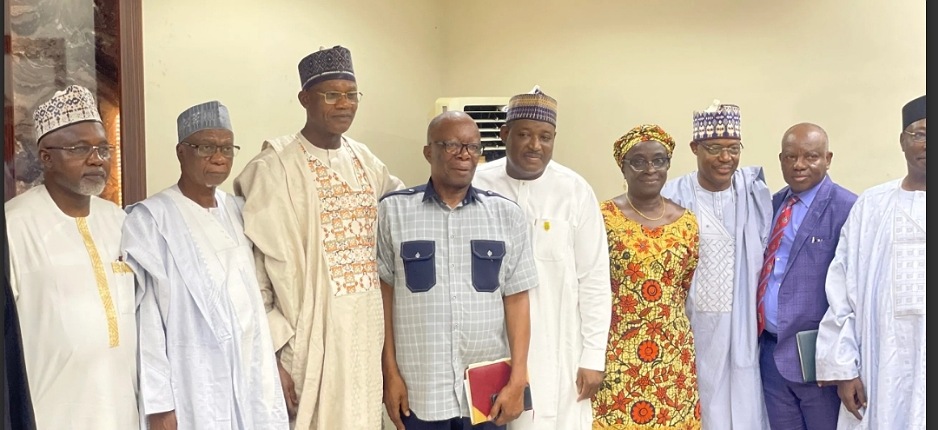
The newly inaugurated committee, chaired by Yayale Ahmed, the Pro-Chancellor of Ahmadu Bello University, Zaria, is the latest attempt to resolve the deadlock. But with the unions increasingly distrustful of the government, the road ahead looks treacherous.
The committee comprises seven government representatives and a staggering 45 members from the unions, including ASUU's president, Professor Emmanuel Osodeke, and vice president, Professor Christopher Piwuna. Despite the large representation, many are questioning whether this latest committee will achieve what its predecessors could not.
The committee’s terms of reference include renegotiating the failed 2009 agreement and recommending measures to reposition the Nigerian university system for global competitiveness—an ironic directive, given the current state of underfunding, poor infrastructure, and mass exodus of lecturers to other countries.
The government has asked the committee to complete its work within three months, but whether it can meet that deadline and avoid yet another nationwide strike remains to be seen.