


The population of Nigeria, as it stands today, is approximately 233,918,610, making it the most populated country in Africa. The country accounts for about 2.91% of the world's population and has a population density of 255 people per square kilometre.
According to sources, the country's population has been steadily increasing, with a growth rate of 2.12 per cent. The United Nations projects that Nigeria's population will hit around 401 million by 2050 and over 728 million by 2100.
A number of factors are responsible for this population growth. They include uncontrolled birth rates, early marriages, a largely illiterate population and limited access to family planning.
Statistics indicate that Nigeria's housing deficit is around 20 million units. The consequence of this is that millions of Nigerians lack access to adequate housing, with many living in slums or informal settlements. Some of such slums include Ajegunle in Lagos, Gbundu in Port Harcourt, Bodija in Ibadan and "Sabon Gari" in Kano. This staggering housing deficit in the country has led to acute accommodation problem and every state has its fair share of the problem.
Bayelsa is certainly not left out. The creation of the state in 1996 caused the relocation of Bayelsans from the old Rivers State to their new state of Bayelsa. This swelled the population of the new state. The 2002 O'odua Peoples Congress (OPC) crisis in Lagos further swelled the population of the state as many Bayelsans living in Lagos were compelled to come back home. Since then the issue of housing has always been a problem.
Successive governments have tried their best but it all amounts to a scratch as the state has only six habitable government-provided housing estates. Three of these are exclusively for civil servants while the other three are for non-civil servants. So, since creation, accommodation has always been an issue.
It was therefore very cheering to hear the state Governor, Senator Douye Diri announce to Bayelsans that government would construct no fewer than 1,000 affordable housing units across the eight local government areas of the state. The governor made the announcement on Tuesday in a statewide broadcast to commemorate Nigeria’s 64th independence and 28 years of the state’s creation.
The governor said in line with his administration's vision to build a New Yenagoa City, government would vigorously pursue a number of projects, including the ongoing construction of the Glory Drive Phase 3, new legislatures quarters, new commissioners quarters, affordable housing estates and a modern stadium.
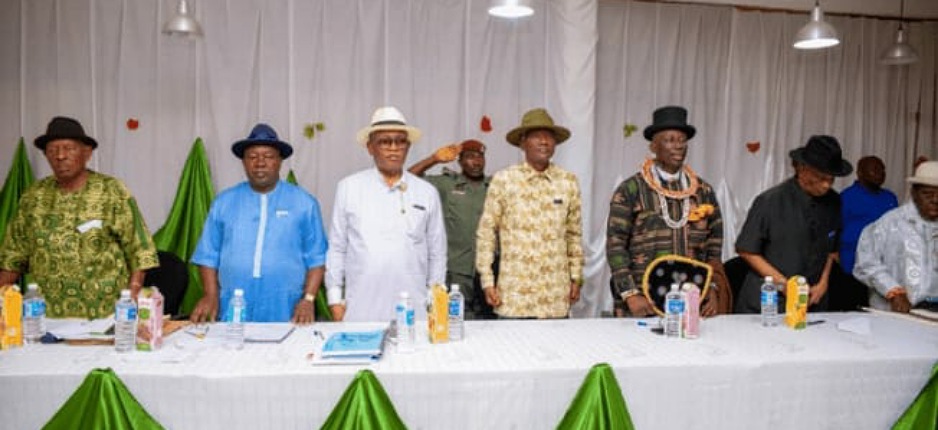
As if to re-emphasise government's commitment to the provision of affordable housing, Governor Douye Diri again repeated his independence day pronouncement of constructing 1,000 housing units across the eight local government areas of the state. This time, speaking through the Deputy Governor of the State, Senator Lawrence Ewhrudjakpo during the Bayelsa Elders Council Quarterly general meeting held at the Niger Delta Wetland Centre, Ekeki, Yenagoa, Diri said housing would be accorded priority attention in his second tenure.
Noting that a number of housing schemes, including the completion of inherited housing projects would be vigorously pursued, Senator Diri maintained that government would deal directly with its housing and property development authority to build low-cost houses for civil servants and other categories of people in the state.
According to the governor, "We are going to fully engage the agency in terms of housing, because it is a major issue in our second term in office. We are going to see to it that we build low-cost houses for the people, including civil servants and some of our deserving elders."
Reacting to government's plan to build housing estates across the state, a Yenagoa-based journalist and civil servant, Stanley Imgbi said "It is a welcome development and the governor deserves commendation. My prayer is that the good Lord should grant him the enablement and political will to follow up the project to the end".
If the government's plan is implemented to the letter, it will certainly provide relief for Bayelsans in the area of housing.