


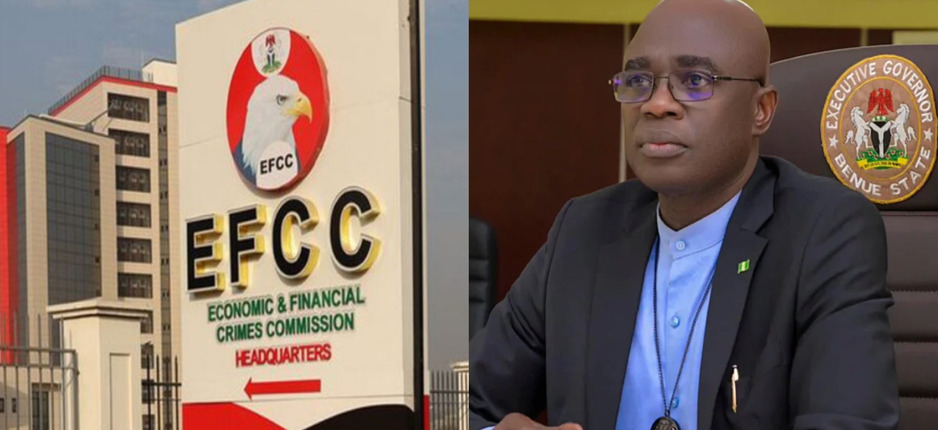
The Benue State Government has withdrawn from a high-stakes lawsuit challenging the constitutionality of the Economic and Financial Crimes Commission (EFCC), just two days after the Supreme Court heard arguments in the explosive case.
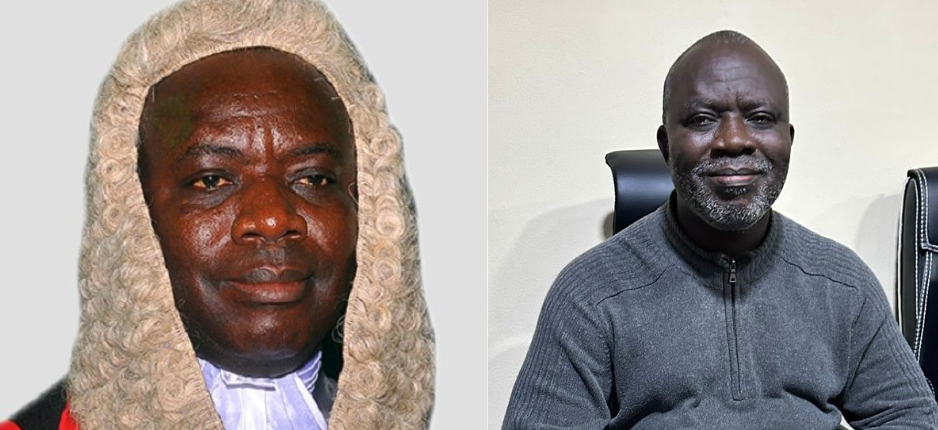
The state’s Attorney General, Fidelis Mynin, filed a “notice of discontinuance” on Thursday, October 24, seemingly pulling the plug on Benue’s involvement in the legal showdown. "Take notice that the Attorney General of Benue State, who is the 8th plaintiff, hereby discontinues this suit," Mynin declared in the filing.
Tensions within Benue’s government erupted on Wednesday when Governor Hyacinth Alia suspended Mr. Mynin, accusing him of joining the controversial lawsuit without proper clearance. “It’s true,” said the governor’s spokesperson, Kula Tersoo, confirming the attorney general’s abrupt removal. “His Excellency suspended the Attorney General for including Benue in the suit without informing the governor.”
Insiders say the state’s participation in the lawsuit sparked a major rift in Alia’s administration, adding further intrigue to the ongoing legal drama.
Mass Exodus: More States Back Out as Judgement Looms
Benue is not alone in its eleventh-hour retreat—Anambra, Adamawa, and Ebonyi states also made unexpected exits this week. Anambra’s Attorney General, Sylvia Ifemeje, confirmed that her state filed a withdrawal motion on October 20. Meanwhile, Ebonyi’s AG, Ikenna Nwidagu, followed suit with a similar filing the next day.
These exits raise doubts about the strength of the original coalition, led by Kogi State, which filed the lawsuit seeking to dismantle the EFCC's authority.
High-Stakes Legal Battle: Is the EFCC’s Legitimacy on the Line?
The case has put the EFCC in the crosshairs, with the plaintiffs arguing that the anti-graft agency’s creation violated Nigeria’s constitution. They claim the EFCC Act was never approved by the majority of state assemblies, as required under Section 12 of the constitution, rendering the agency's powers illegitimate.
The plaintiffs pointed to a 2004 Supreme Court ruling to bolster their case, alleging that the EFCC Act bypassed a critical legislative process tied to international conventions like the UN Convention Against Corruption.
On Tuesday, Kogi’s lead counsel, Mohammed Abdulwahab, urged the court to declare the EFCC’s operations unconstitutional.
But the Attorney General of the Federation, Lateef Fagbemi, hit back hard, arguing that prior rulings—such as AG Ondo v. AG Federation—had already settled the matter. Fagbemi dismissed the states’ argument as “rehashing old legal battles” and urged the court to throw out the suit.
Courtroom Surprises and Strategic Withdrawals
The legal drama has seen multiple twists, with the Supreme Court striking out Ekiti State’s related suit after its attorney general failed to show up. Meanwhile, Osun, Nasarawa, and Ogun states filed motions to merge their cases with Kogi’s, ensuring they would abide by the final judgement.
Despite the recent exodus, a determined group of 15 states, including Kebbi, Katsina, Enugu, Oyo, and Sokoto, are pressing forward, signaling a no-holds-barred legal fight to the finish.