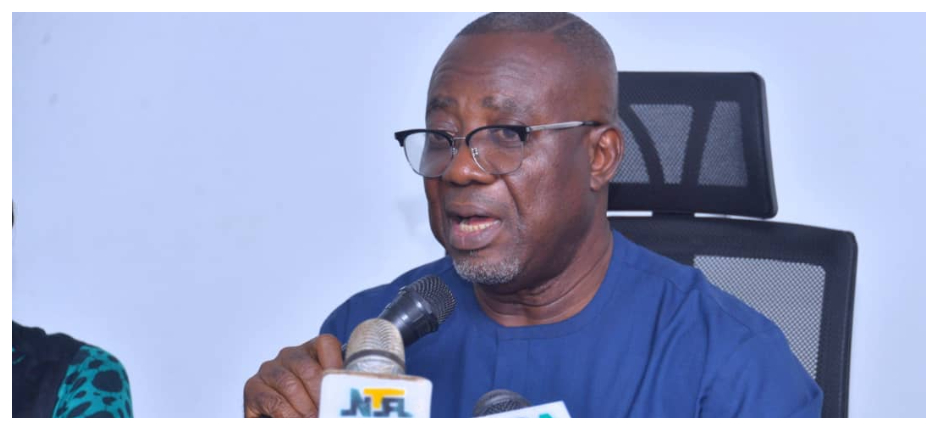


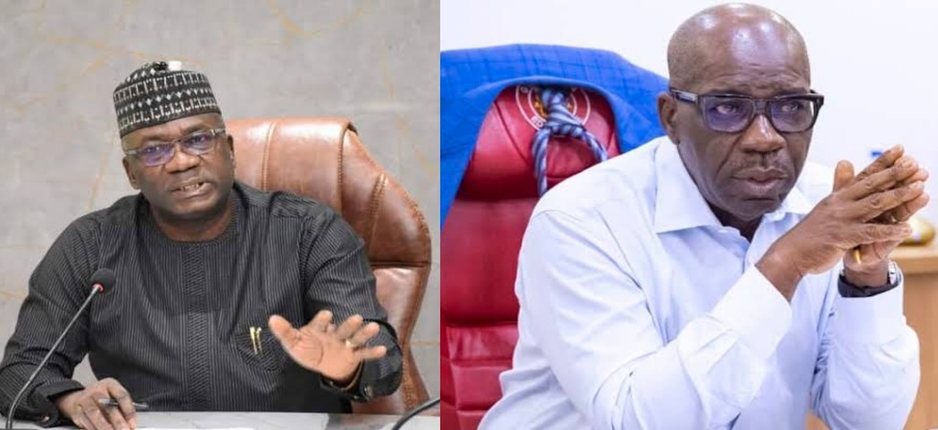
The Edo State Assets Verification Committee has uncovered shocking revelations regarding the financial dealings of the former administration of Governor Godwin Obaseki. According to the committee, the previous government left behind an astounding N200 billion in contractual debts. These findings were disclosed by the committee’s chairman, Dr. Ernest Afolabi-Umakhihe, during a press briefing in Benin on Thursday.
Afolabi-Umakhihe outlined several irregularities surrounding the execution of projects and financial management under Obaseki’s administration. He alleged that funds meant for mobilizing contractors were sometimes diverted, with some of the money allegedly being funneled back to government officials. Despite these concerns, Afolabi-Umakhihe called on the new administration under Governor Monday Okpehbolo to make use of the ongoing dry season to continue work on critical road projects, many of which were rushed in the run-up to the September 2024 elections.
“We cannot deprive the people of Edo State of the vital infrastructure they deserve, particularly when the dry season presents an opportunity to complete these projects,” Afolabi-Umakhihe emphasized. “It is crucial for the government to take swift action and ensure that the progress made on road construction does not falter.”
A major point of contention highlighted by the committee was the overwhelming financial burden left by the former administration. According to Afolabi-Umakhihe, many of the contracts for road infrastructure were awarded in the final months of the previous administration, leaving Governor Okpehbolo’s government with the responsibility of settling outstanding debts, estimated at about N200 billion. Moreover, he pointed out that some contractors were required to return mobilization payments to government officials, which he argued had significantly slowed the progress of projects.
Further complicating matters were allegations of mismanagement and inefficiency within key Ministries, Departments, and Agencies (MDAs). The committee raised concerns over poor documentation and violations of the state’s public procurement law, which they claimed allowed for excessive variations in contract amounts. In some instances, the variations were so large that they exceeded the original contract value.
A significant focus was placed on the controversial Radisson Hotel project, which Afolabi-Umakhihe described as a prime example of mismanagement. Initially funded with N17.5 billion from the stock market and an additional N2 billion for land acquisition, the project was supposed to be a major investment for Edo State. However, just before the administration’s departure, the state's ownership stake was drastically reduced to a mere 20%. Afolabi-Umakhihe stressed that the state should reclaim its central position as the primary investor in this project.
The committee also scrutinized other major initiatives under the Obaseki administration, such as the Edo State Oil Palm Project. This initiative was flagged for operating with a lack of transparency, with exorbitant payments made to consultants. Additionally, the Museum of West African Arts (MOWAA) project, which was developed on government land, left the state without any equity stake, despite a substantial contribution of N3.8 billion from public funds.
Equally troubling were the technology projects, which, according to the committee, were outsourced to private consultants with questionable financial claims. One of the most concerning findings was a contract to pay N5 billion for a three-year cyber security software license for the EdoGov platform, with N1.7 billion already paid by the outgoing administration.