


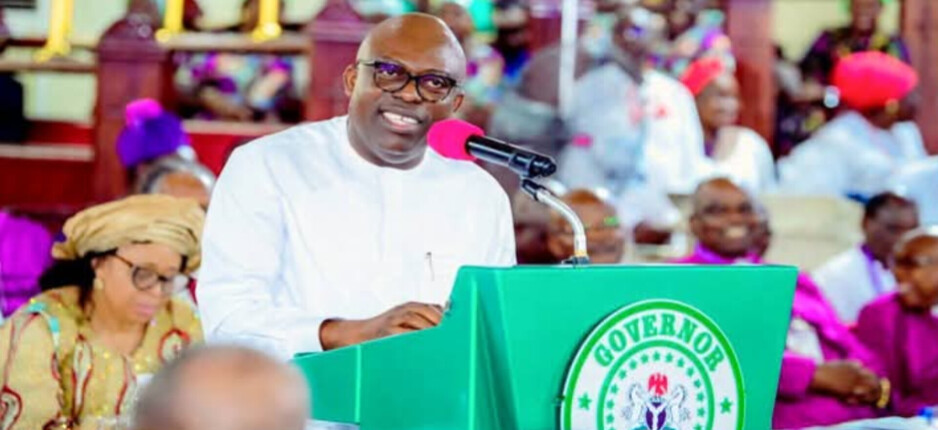
The Governor of Rivers State, Sir Siminalayi Fubara, has identified the persistent attacks by herdsmen and terrorists on farmers as a major cause of the growing hunger crisis in Nigeria. He called on the church to actively contribute to peace-building efforts, emphasizing the role of religious institutions in promoting stability and development.
Governor Fubara delivered this message while addressing the opening of the 2025 Standing Committee Meeting of the Church of Nigeria (Anglican Communion), held at St. Cyprian's Anglican Church in Port Harcourt, Rivers State, on Wednesday. The theme of the meeting centered around peace and unity, areas which the Governor highlighted as crucial to solving Nigeria's socio-political and economic challenges.
"The Church remains a critical partner in the development of any society," Fubara noted. "Through its teachings, it can influence positive change, promote peaceful coexistence, and foster development across the nation." He explained that while the government continues to tackle the numerous problems facing the country, the support of institutions like the church is essential to achieving meaningful and lasting results.
The Governor stressed that insecurity has prevented farmers from working freely, resulting in reduced agricultural production and exacerbating hunger. "The hunger we're facing is not because we have stopped farming," Fubara remarked. "It's because farmers are afraid to go to their fields due to the threats of bandits and terrorists. Until we address this, food shortages will continue to plague us."
In his remarks, the Governor also addressed the ongoing challenges within Nigeria's healthcare sector. He pointed out the need for improved welfare for medical professionals to prevent the exodus of talented doctors from the country, a phenomenon popularly referred to as "japa."
"Many of our doctors are leaving the country because of poor welfare," he said. "When they go abroad, they excel. This shows the level of expertise we have here, but we need to do more to keep them. If we can improve the healthcare system, we can match the standards of any country in the world."
Governor Fubara further emphasized his administration's commitment to youth development, noting that a sum of N5 billion has been allocated to various programs aimed at empowering young people in the state. He assured that these efforts would continue to be a priority throughout his time in office.
The Governor expressed his gratitude to the leadership of the Anglican Church for choosing Rivers State as the venue for the important gathering, especially during challenging times. He viewed the meeting as a sign of divine support for his administration, noting that the spiritual presence of clergymen and their prayers would positively impact the state.
"Our responsibility is to support the church's activities," Fubara said. "To that end, we are contributing N500 million to help sustain the church’s efforts in 2025."
In his Presidential Address, the Primate of the Church of Nigeria (Anglican Communion), Most Rev. Henry Ndukuba, spoke extensively on the need for peace, unity, and love within the church and the country at large. The theme of the 2025 meeting, "The Bond of Peace: The Core of The Life and Ministry of the Church," focused on how the church can play a leading role in fostering social harmony.
Archbishop Ndukuba also called for a review of Nigeria's national constitution, arguing that the current framework—originally imposed by the military—has not provided the desired direction for the country. He urged the government to draft a new constitution that reflects the aspirations of the people, ensuring justice, equity, and fairness for all citizens.
He further advocated for the establishment of a National Reconciliation Commission to address deep-seated issues stemming from Nigeria's historical conflicts, including the 1966 coup and the Civil War. According to the Primate, such a commission could facilitate healing and help mend the divisions that have long caused tension in the nation's political landscape.
"The issues of justice and equality must be openly discussed, legislated, and implemented for Nigeria to move forward as a united nation," Archbishop Ndukuba said. He reiterated the need for a peaceful and inclusive society where all citizens have equal opportunities to thrive.
Addressing the current economic challenges facing Nigerians, the Primate spoke on the worsening inflation, rising food prices, and the harsh living conditions experienced by many. He urged the federal government to implement policies that would alleviate these burdens and improve the lives of ordinary citizens.
In his welcome address, the Bishop of the Niger Delta Diocese, Rev. Dr. Emmanuel Oko-Jaja, commended Governor Fubara for his administration's unwavering support for the church and the numerous people-oriented policies aimed at uplifting the welfare of the people of Rivers State.
The Standing Committee Meeting, which drew participants from across the nation, was an opportunity for both spiritual and political leaders to engage on crucial issues facing the country, with the overarching goal of creating a more peaceful, prosperous, and united Nigeria.