



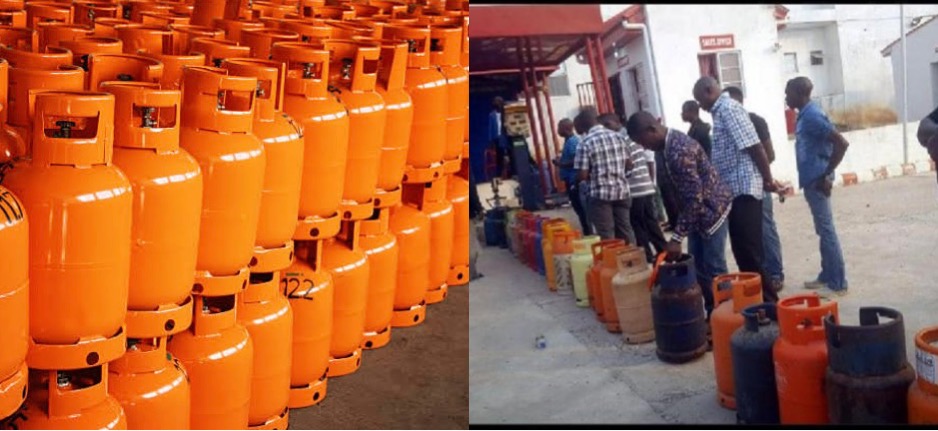
The price of Liquefied Petroleum Gas, also known as cooking gas, has increased to N1,500 per Kg, as Nigerians struggle with the high cost of petrol.
This surge has increased the average price for a 12.5kg cylinder to N17,000 in Abuja, up 41.6% since July, when it cost around N12,000.
In Bayelsa state, retail prices ranges from N1,350 to N1,500, while in gas stations or gas plants, N1,250 to N1,350. Also in Ogun state and Lagos, retail prices range from N1,300 to N1,500 per Kg, further squeezing household budgets.
Managing director and CEO of NIPCO Plc, Suresh Kumar, voiced concerns about Nigeria’s reliance on imported LPG.
“Currently, less than 40% of the 1.5 million metric tonnes consumed domestically is produced locally. The government must encourage companies like Chevron to convert more propane output into butane, which is more suitable for domestic use,” Kumar stressed.
The scarcity of local LPG production exacerbates high prices, which have pushed many Nigerians toward alternative cooking fuels, such as charcoal.
The Ogun State’s Commissioner for Environment, Ola Oresanya, warned that more families might turn to less efficient cooking methods if the price hike continues.
Despite the grim outlook, Kumar remains optimistic that increased local refinery output could help drive down prices.
He noted that LPG production should grow with the Dangote Refinery and other facilities now sourcing crude oil locally, easing reliance on imports and reducing the impact of foreign exchange fluctuations on prices.
“There is hope that the reliance on imported LPG will decrease, positively influencing domestic prices,” Kumar assured.
Kumar also emphasized the need for investment in gas infrastructure to expand Nigeria’s LPG capacity. “Our latest assessments shows that existing downstream infrastructure can handle up to 5 million MT annually, preparing us to accommodate increased production from local gas fields,” he explained.
Since entering the LPG market in 2004, NIPCO has invested heavily in infrastructure to make cooking gas accessible to Nigerians.
“Our facility in Apapa, which began at 5,000 MT, now has a capacity exceeding 20,000 MT,” Kumar said, underscoring NIPCO’s commitment to bolstering national energy infrastructure.
The NIPCO CEO called on the government to support local refineries and refocus on boosting LPG output.
“It is crucial for the government to back these refineries to significantly increase LPG output. This will drive down retail prices and make the product more accessible to Nigerians,” he urged.
With high prices dampening LPG consumption, Kumar hopes market conditions will improve as more local players enter the sector.
“The current high prices are temporary. With more entrants in gas processing, we anticipate a market correction soon,” he concluded, while still calling for collaborative efforts to realize the full potential of Nigeria’s gas reserves.