

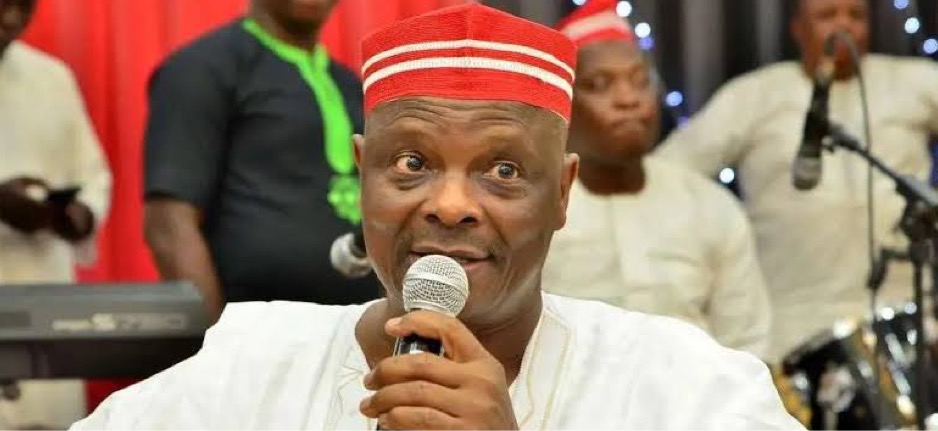
Senator Rabiu Musa Kwankwaso, a former governor of Kano State and leader of the New Nigeria Peoples Party (NNPP), has made grave allegations regarding Lagos' growing influence over northern Nigeria, claiming that there are deliberate efforts to exert control over the region. His remarks were made during a speech at the convocation ceremony of Skyline University in Kano, where he expressed concerns about the ongoing political and economic challenges facing the North.
Kwankwaso accused the administration of President Bola Ahmed Tinubu, a Lagos native, of interfering in local matters in northern Nigeria, particularly the ongoing conflict surrounding the selection of emirs in Kano. He alleged that Lagos is attempting to dominate the northern region, even in matters of traditional leadership. According to Kwankwaso, the central government and political elites from Lagos are actively working to influence decisions that should be made locally, such as the appointment of emirs in Kano.
"Today, we can see clearly that there are efforts from the Lagos axis to colonize this part of the country. Lagos is preventing us from making our own decisions, even regarding the selection of an emir. They are inserting their influence into the heart of Kano," Kwankwaso said, adding that these efforts are creating tension and disrupting the political fabric of the North.
Kwankwaso also criticized Lagos for allegedly siphoning economic resources from the North. He cited the example of tax collection, claiming that young entrepreneurs from Lagos are working to divert taxes from Kano and other northern states to Lagos. Additionally, he expressed concern about northern businesses being forced to relocate their operations to Lagos, under pressure to pay taxes to the southern economic hub. "Our local factories, businesses, and banks are being pressured to move their headquarters to Lagos, where the taxes are being redirected," he lamented.
Highlighting the widening gap between the rich and the poor, Kwankwaso accused those in power of deepening economic inequality, benefiting the wealthy while leaving the poor to struggle. "We have seen how some forces are trying to make the rich richer and the poor poorer, and this is a dangerous trend that needs to be addressed," he warned.
He further called on northern lawmakers to be vigilant and safeguard the interests of the region in national legislation. Drawing attention to past instances where northern legislators were allegedly bribed to support policies that harmed the region, Kwankwaso urged his colleagues to prevent a repeat of such compromises. "Our National Assembly members must remain alert to ensure that the North is not cheated or manipulated in any way," he said.
In the context of recent tax reform proposals by President Tinubu, Kwankwaso expressed concern that the changes could disproportionately disadvantage the northern region. The president has called for the passage of four major tax reform bills, including the Nigeria Tax Bill, the Tax Administration Bill, and the Joint Revenue Board Establishment Bill, among others. While the government argues that these reforms are intended to streamline the tax system and benefit the nation as a whole, many northern leaders, including the Northern States Governors Forum (NSGF), have voiced opposition to the bills. They claim that the reforms could undermine the region’s economic stability and further concentrate resources in Lagos.
The NSGF, in its October 28 statement, urged the National Assembly to reject the proposed tax changes, calling for a more equitable distribution of resources and a fairer approach to policy implementation across all regions. The National Economic Council (NEC) also recommended that the government withdraw the bills to allow for further consultation with all stakeholders.
Despite this, President Tinubu has remained firm in his position, stating on November 1 that he would not withdraw the bills, emphasizing that the proposed reforms are vital for the nation’s economic growth and the well-being of all Nigerians.
Kwankwaso’s statements have sparked a renewed debate about the growing influence of Lagos in national politics and the potential risks of centralizing power in the economic capital at the expense of other regions. As the debate over tax reforms and regional equity continues, the situation remains tense, with both northern leaders and the federal government standing firm on their respective positions.