

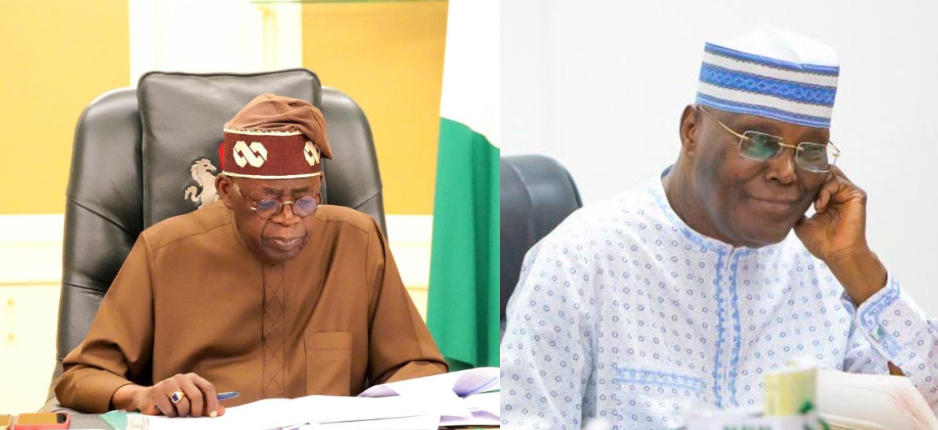
The Presidency responded sharply to former Vice President Atiku Abubakar’s recent criticism of President Bola Ahmed Tinubu’s economic policies and leadership, calling his remarks out of touch with the nation’s current realities.
In a statement issued last week, Atiku launched a detailed critique of President Tinubu’s efforts to revitalize the economy, accusing the administration of implementing poorly conceived policies. He titled the statement "What We Would Have Done Differently" and argued that the government's actions were misguided.
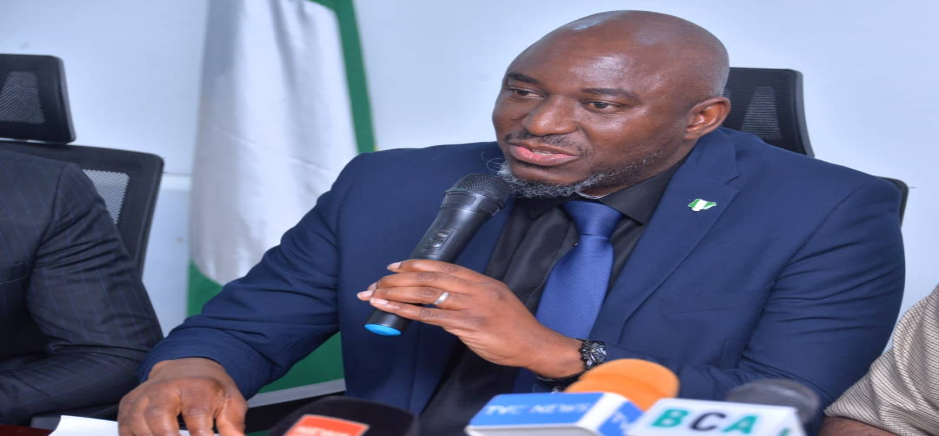
However, in a rebuttal issued on Sunday in Abuja by the President's Special Adviser on Information and Strategy, Mr. Bayo Onanuga, the Presidency dismissed Atiku’s comments as "grand illusions and fantasies." It also suggested that the former Vice President was more focused on undermining President Tinubu than addressing the internal struggles within his own party.
The statement also accused Atiku of harboring envy toward the President and emphasized the Tinubu administration's commitment to its reform agenda, notably the controversial removal of fuel subsidies, which the government argued has helped prevent a potential fiscal crisis.
It stated: “In 2024 alone, the removal of the fuel subsidy is projected to save Nigeria N5.4 trillion. These funds, which would otherwise have been wasted, are being channeled into critical infrastructure development and social intervention programmes that will benefit all tiers of government and improve the lives of Nigerians.”
Atiku, who was defeated by Tinubu in the 2023 presidential election, suggested that he would have adopted a more consultative approach to address Nigeria’s economic issues.
However, the Presidency rejected his proposals as impractical and disconnected from reality. It argued that the former Vice President failed to acknowledge the decades of mismanagement that the Tinubu administration inherited from previous governments.
“It is perplexing that he would elevate his untested, hypothetical proposals, which Nigerians soundly rejected during the 2023 presidential election, and seek to present them as superior to the multi-faceted reform programmes implemented by the Tinubu administration.
According to the statement: “If his plan lacked popular appeal then, he must acknowledge that repackaging it now will not resolve the social and economic challenges his Peoples Democratic Party (PDP) bequeathed after 16 years in power.”
Furthermore, the Presidency clarified that the removal of fuel subsidies, often seen as a politically risky decision, had set the foundation for a more sustainable fiscal future.
“As of mid-2023, the landing cost of fuel was between N500 and N600, while it was sold nationwide at an average of N200. The 2023 budget allocated N3.36 trillion for fuel subsidies until June, against a projected N2.23 trillion in oil revenue for the year. The Nigerian state was on life support.”
The Presidency criticized Atiku for his “hypothetical and fabled presidency” and took issue with his proposed "consultation period," arguing that it lacked the urgency needed to address the nation’s pressing challenges.
The statement read: “What reforms would Atiku propose at the onset of his hypothetical presidency? While he suggests a consultation period upon assuming office, the reality is that the Nigerian economy requires immediate and decisive action. A leader must be prepared to tackle challenges from Day One, as President Tinubu has done.”
The Presidency highlighted several areas of significant progress under the Tinubu administration, including advances in revenue generation and social welfare initiatives.
While giving credit to the administration's reform policies with nearly doubling the revenue from the Federal Inland Revenue Service (FIRS) in the first half of this year compared to 2023. Additionally, it pointed to wage increases in various states as a testament to the administration's positive impact on the economy.
“We expect Atiku to commend what the Tinubu administration has done concerning revenue generation for the federation.
“Without factoring in oil sales, revenue proceeds generated by the Federal Inland Revenue Service almost doubled in the first half of 2024, compared with the level Tinubu met in 2023. The states and councils are more prosperous because of it, as many states have increased the minimum wage for their workers to between N70,000 and N85,000,” it stated.
The Presidency also rejected Atiku's suggestion to privatize Nigeria's four government-owned refineries, describing it as "unoriginal" and insufficient to address the country's fuel needs.
The statement further contrasted Atiku's approach with President Tinubu's plan, which aims to revitalize the nation's refining capacity through private sector management while maintaining government ownership.
Furthermore, the Presidency scrutinized Atiku’s record as Vice President, particularly his involvement in the privatization of public assets. It accused him of overseeing the sale of assets that were subsequently stripped and left as "dead assets."
In contrast, the statement emphasized that the Tinubu administration is committed to retaining and developing national assets with a focus on long-term growth.
“Today, most public enterprises Atiku sold have been stripped and become dead assets,” the statement said, adding that President Tinubu’s model was intended to stabilise domestic production and retail prices while reducing foreign exchange challenges.
The statement argued that this approach will guarantee domestic production and stabilise retail prices by reducing foreign exchange challenges. It further explained that selling crude oil to the refineries in naira could lead to potential cost reductions, which would ultimately be reflected in retail prices.”.
The Presidency also took aim at Atiku’s proposals for foreign exchange management, labeling his support for a "managed float" exchange rate as outdated and problematic.
It dismissed Atiku's corruption claims regarding the Nigerian National Petroleum Corporation (NNPC) as unfounded.
Finally, the Presidency urged Atiku to move past "the petty, derisive politics of a sore loser" and focus on offering a more constructive approach to solving Nigeria’s challenges.
“President Tinubu remains focused on leading Nigeria toward a prosperous future and addressing our nation’s real challenges. Atiku Abubakar should abandon his politics of distraction and fantasies and focus on constructive discourse,” the statement concluded.