


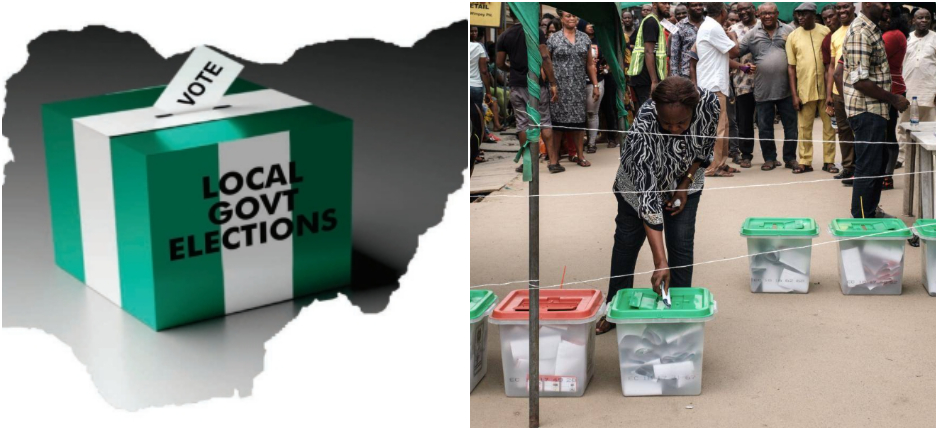
Local government elections in Nigeria face serious challenges that weaken democracy, prioritizing autonomy and improving election quality should be central in our constitutional amendments.
Credible elections at the grassroots level are essential for fostering genuine democracy in Nigeria. Local governments play a crucial role in addressing community needs and concerns, and their effectiveness relies on a transparent electoral process.
Strengthening the integrity of local elections can empower citizens, enhance accountability, and ensure that elected officials genuinely reflect the will of the people. The local government system is intended to function at the grassroots level, facilitating citizen participation in governance. This setup is supposed to promote good governance and deliver essential social services necessary for local development.
However, the reality often strays from this goal, as state governments and political parties impose candidates, undermining the people's choice and effective representation. Local government election processes and outcomes are frequently inadequate and often pre-determined, resulting in the ruling political party winning all local government positions within the state.
Many states experience widespread electoral malpractice, including vote buying, intimidation, and lack of transparency. Often, these elections are dominated by political party interference, where candidates are imposed rather than elected through a fair process. Voter apathy is prevalent due to the perception that local government elections are not credible, leading to low turnout and further delegitimizing the process.
Furthermore, in many cases, the heads and members of the State Independent Electoral Commission (SIEC) are appointed and funded by state governments, compromising the board's independence, limiting its ability to conduct transparent and credible elections and stifling their ability to serve the needs of the community effectively.
Since the Supreme Court of Nigeria issued its landmark ruling on July 10, granting financial autonomy to the 774 local governments, state governments have been establishing committees to oversee local elections, with some states already having held theirs. While many Nigerians welcomed the ruling, hoping for independent local government operations free from state control, recent election outcomes suggest those hopes may have been dashed.
The State Independent Electoral Commisions (SIEC) are far from independent. Local council elections are routinely manipulated by governors and state elites to favor the ruling political party and so the push for better local government elections is linked to the agitations for local government autonomy.
From the elections already conducted, particularly in the southeastern part of Nigeria, the incumbent ruling political party has swept all local government positions, a trend that has unfortunately been consistent in the past.
The results of the recent local government elections held in Ebonyi, Imo and Enugu state for instance, have again shown the futility of efforts to entrench credible polls at the local level. In each of the local government elections, the ruling political parties in the states won all chairmanship and councillorship seats.
In Imo State, the ruling All Progressives Congress (APC) won all 27 local government chairmanship and 305 councillorship seats in the local government elections.
In response to the Imo State Local government election results, a group called the National Youth Alliance (NYA), Imo State chapter, called the state LGA election a charade and a blow to democracy. They alleged that the Imo State Independent Electoral Commission (ISIEC) colluded with the ruling APC to undermine the process, claiming the Commission deprived voters of their rights.
They also accused the Imo State Independent Electoral Commission (ISIEC) of selectively distributing electoral materials and noted that staff failed to appear in some council areas, yet results were reported from those locations.
Some civil society groups that monitored the election reported that electoral materials arrived very late and voter turnout was low in many areas. They noted that many people chose not to participate due to a lack of confidence in the election's transparency.
The ruling Peoples Democratic Party(PDP) in Enugu state won all chairmanship positions in the recent council elections held on Saturday, September 22.
While Prof. Christian Ngwu, Chairman of the Enugu State Independent Electoral Commission (ENSIEC), hailed the election as the most transparent yet, it is noteworthy that none of the opposition candidates who contested the chairmanship position attended the ENSIEC announcement of the election results, translating to non-acceptance of the result.
In Ebonyi State, the elections held on July 20, 2024, saw the ruling All Progressives Congress (APC) winning all 13 chairmanship seats and 171 ward councillor positions.
Regarding the Anambra State local government elections scheduled for Saturday, September 28th, ANSIEC has assured that the processes are secure from manipulation.
However, The All Progressives Congress(APC) in Anambra State has withdrawn from the local government elections citing concerns over irregularities and illegalities.
Anambra State Chairman of the APC, Chief Basil Ejidike, stated, “How can a respected party like APC participate in an election when political parties aren’t given enough time for primaries, there are no campaign rallies, and forms aren’t sold in line with the Electoral Act?”.
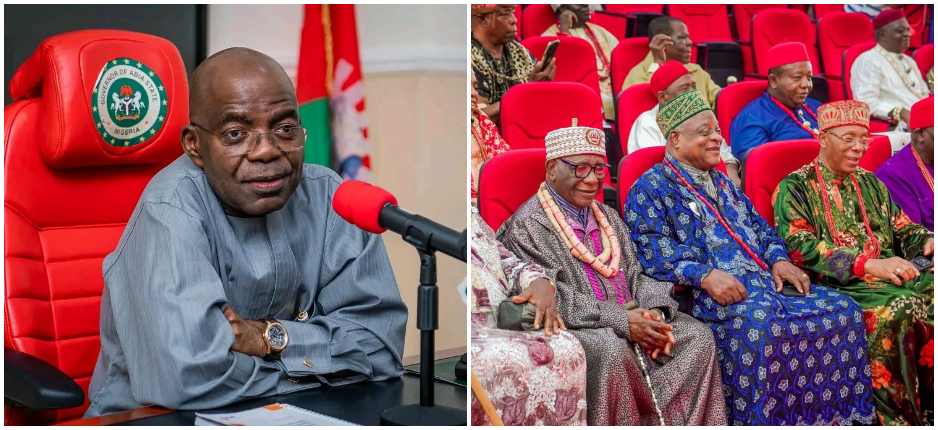
Quoting Governor Chukwuma Soludo at a mega rally ahead of the September 28 local government election, he stated, “Ndi Anambra can vote for anyone, but for local elections, they have decided that APGA is the vehicle for transforming their state".
This could be a signal to opposition parties that they stand little chance of winning any positions in the local government elections.
In Abia State, the Abia State Independent Electoral Commission (ABSIEC) has released its electoral calendar for the local government chairmanship and councillorship elections set for November 2, 2024. However, opposition political parties have raised concerns about the short notice, stating that they lack sufficient time to prepare for the polls.
The State Inter-Party Advisory Council (IPAC), led by Chairman Uluocha Chimex, urged the Governor of Abia State to refrain from interfering with ABSIEC's ability to conduct a transparent and credible election.
The Fourth Schedule of the Nigerian Constitution outlines specific responsibilities for local governments, including providing and maintaining primary, vocational, and adult education, offering healthcare services, promoting agricultural development; naming streets and numbering houses; and establishing and maintaining cemeteries, motor parks, markets, and slaughterhouses, among other duties. However, local government leaders frequently struggle to fulfill these responsibilities because of insufficient allocations from state governments. These Local Government Area Chairmen struggle to provide basic services because they are either selected or elected by the state government, which limits their ability to voice concerns, even when necessary.
Although some individuals and groups advocate transferring local government election responsibilities from states to INEC or another federal body as a means to boost election credibility, the history of INEC suggests that this approach could negatively impact our democracy and federalism, ultimately missing its intended objectives.
To enhance the performance of SIECs, we must prioritize the reinforcement of our laws that protect their operational, administrative, and financial independence.
Legislative reforms are necessary to create mechanisms for the fair distribution of power to state and local governments. This includes enacting laws that enhance the administrative and financial autonomy of local governments.