


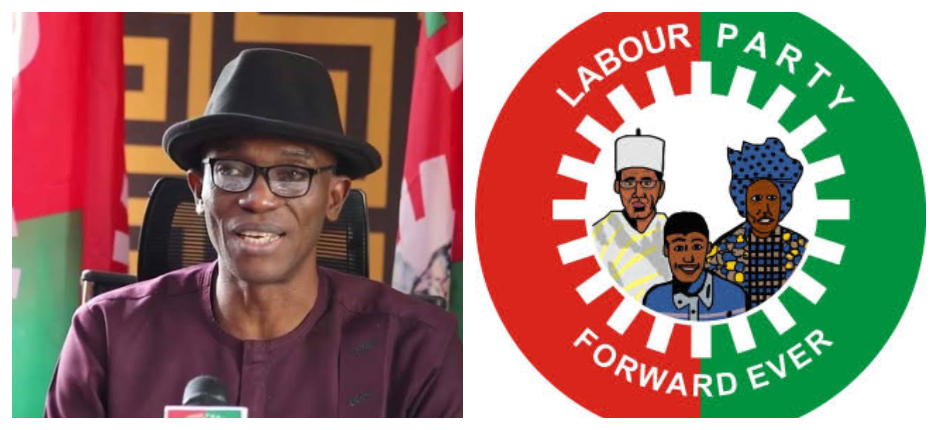
The Independent National Electoral Commission (INEC) has reaffirmed it’s stance that Julius Abure's continued portrayal as Labour Party's National Chairman is unconstitutional and illegal. In a counter affidavit filed in response to the Labour Party's suit, INEC emphasized that Abure's tenure, along with other national working committee members, expired in June 2024.
INEC's position centers on the party's March 2024 National Convention, which allegedly re-elected Abure as chairman. However, the commission asserts that this convention violated the Nigerian Constitution and Electoral Act. Consequently, INEC refuses to recognize Abure and the party's current leadership.
Furthermore, the electoral body's legal team, led by Tanko Inuwa, SAN, argued that the Labour Party's suit seeking declaratory reliefs cannot be granted without merit because the party must demonstrate a valid case, regardless of admissions. Furthermore, INEC's lawyers emphasized that the Labour Party's non-compliance with legal frameworks in conducting its national convention renders its leadership invalid.
INEC urged the court to dismiss the suit, stressing that the Labour Party is not entitled to the sought reliefs. The commission maintains that it only engages with parties possessing valid and subsisting leadership.
The Labour Party's leadership crisis has significant implications for its participation in upcoming elections, including the Edo and Ondo States governorship polls.
The Labour Party leadership crisis in Nigeria started after the death of its National Chairman, Alhaji Abdulkadir Abdulsalam, in 2020. Following his demise, Barrister Julius Abure was elected as the new National Chairman by the Labour Party National Executive Council (NEC) in 2021. However, this election was contested by the party's former Deputy National Chairman, Calistus Okafor, who claimed to be the authentic National Chairman.
The crisis deepened when the party held its national convention in March 2024, which was disputed by the Independent National Electoral Commission (INEC). INEC refused to recognize Abure and other national working committee members, stating that their tenure had expired in June 2024. The commission also cited violations of the Nigerian Constitution and Electoral Act in the conduct of the convention.
INEC was established in 1998 by the 1999 Constitution of the Federal Republic of Nigeria. Its primary mandate is to organize and conduct free, fair, and credible elections in Nigeria. The Electoral body plays a critical role in Nigeria's democratic process, and its effectiveness is crucial for the conduct of free, fair, and credible elections.
Read More