



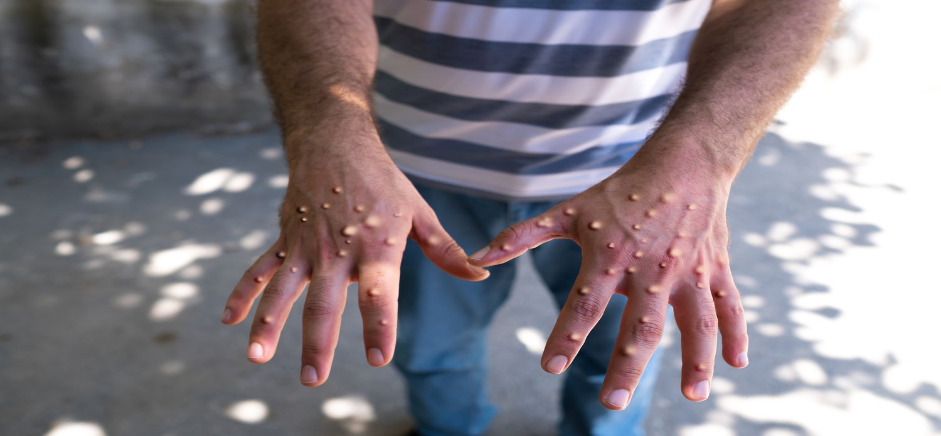
With the ongoing rapid rise of the Mpox virus across various nations of the world, the united nation’s World Health Organization (WHO), has declared a public health emergency of international concern saying that the virus can be curtailed.
According to the WHO’s European director, Hans Kluge, he admitted that there is need for more research to be made on the mpox virus even though drastic and efficient measures have been put in place to have a full control over the virus outbreak.
The WHO’s European boss made this known on Tuesday, while addressing newsmen at the organization’s Headquarter in Geneva.
Precisely in the month of July 2022, the world Health Organization announced a public health emergency of international concern over the international outbreak of the less severe strain of mpox, which mostly affected gay and bisexual men.
In his statement, the UN boss said: “Two years ago, we controlled mpox in Europe thanks to the direct engagement with the most affected communities. We put in place robust surveillance; we thoroughly investigated new cases and contacts''.
“Mpox is not the new Covid. We know how to control mpox. And, in the European region, the steps needed to eliminate its transmission altogether”.
The World Health Organization (WHO) mentioned that the mpox outbreak is not another form of the Covid-19 virus, stressing that enough research has already been made concerning the virus and also the discovery of measures to control it.
“Are we going to go in lockdown in the WHO European region, it’s another COVID-19? The answer is clearly: ‘no’,” Kluge said.
While there is need on the Clade one billion strain which triggered the UN agency into declaring a public health emergency of international concern, the spread of mpox can be curtailed.
According to Kluge, “Behaviour change, non-discriminatory public health action, and mpox vaccination contributed to controlling the outbreak”.
According to findings, the mpox virus can be mostly transmitted through close contacts, bodily fluids, and the possibility of individuals with acute phase of mpox infection, especially with blisters in the mouth, to transmit the virus to close contact by droplets.
WHO made a declaration of an international health emergency on August 14, because of concern by the rise in cases of the virus in the Democratic Republic of Congo and its spread to neighboring countries.
Read More