

The August 1 #EndBadGovernance protest has left an indelible mark on Nigeria's political landscape, raising a plethora of unanswered questions that continue to haunt the Federal Government and the country's political leaders.
The organizers of the protest are also left to rue their missed opportunities to effectively convey their message to the relevant authorities, leaving many to wonder what could have been achieved if the protest had been peaceful and well-coordinated.
In the aftermath of the protest, the Federal Government had alleged a sophisticated and elaborate plot to force a regime change and disrupt the administration of President Bola Ahmed Tinubu.
This allegation, based on credible intelligence gathered before, during, and after the protest, has put those linked to the protest in a precarious position, facing potential treasonable charges that could have far-reaching consequences.
The violent turn taken by the protest, resulting in widespread looting and destruction of national assets in some states, has led to the arrest of some youths, who are now facing treasonable charges. The images of burned buildings, looted shops, and destroyed infrastructure are a stark reminder of the devastating consequences of unchecked violence and the need for peaceful and constructive engagement.
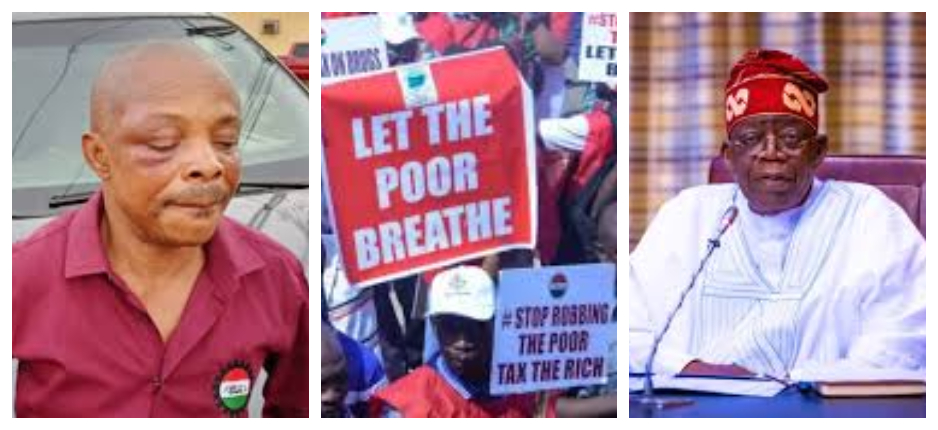
Furthermore, the raid on the NLC secretariat, the invitation of the NLC President, and his subsequent arrest at the Nnamdi Azikiwe Airport, Abuja on his way to attend an official engagement of TUC United Kingdom have raised concerns about the government's handling of the situation and its implications for the future of protests and dissent in Nigeria.
The arrest of the NLC President, a key figure in the labor movement, sent shockwaves through the country, with many questioning the government's motives and the potential consequences for the labor movement.
As the country grapples with the fallout from the protest, many are left to wonder what the future holds for Nigeria's democracy and the rights of its citizens to peacefully assemble and express their grievances.
Will the government's response to the protest mark a turning point in the country's history, or will it be just another chapter in the ongoing struggle for good governance and accountability?
The troublemaker tag on the leader of the Nigeria Labour Congress (NLC),
Joe Ajero, and alleged partisanship would significantly complicate the organized labour's ability to make concrete demands on the Federal Government without being misconstrued as vendetta-driven.
The nation's workforce, undoubtedly, should be the epicenter of any peaceful agitation, given their organized nature and inherent solidarity. This unique disposition makes them an effective force for change, but it can also be exploited for ulterior motives.
However, in their absence, who would champion the cause of ordinary Nigerians? The workforce, through their unions, has historically been the vanguard of resistance against oppressive policies and advocate for workers' rights. Without their involvement, the voice of the common man would be silenced, leaving them vulnerable to exploitation.
The NLC, as the umbrella body of workers' unions, has a crucial role to play in holding the government accountable for its actions. But with the leader being labeled a troublemaker, the government might dismiss their demands as mere politicking, rather than genuine concerns for the welfare of Nigerians.
This development could have far-reaching consequences, including the erosion of trust between the government and the workforce, and the diminution of the workforce's bargaining power. It might also embolden the government to disregard the rights of workers, knowing that their demands can be easily dismissed as partisan.
In this scenario, the ordinary Nigerian would be the biggest loser, as they would be left without a strong advocate to champion their cause. The absence of a united and effective workforce would create a power vacuum, allowing the government to act with impunity, without fear of repercussions.
Therefore, it is essential to address the concerns surrounding the NLC leader's alleged partisanship and work towards building trust between the government and the workforce. This would ensure that the workforce can continue to play its vital role in promoting good governance and protecting the rights of ordinary Nigerians.
READ ALSO: https://nigerdeltaconnect.com/updated-nlc-confirms-ajaeros-arrest-by-dss