


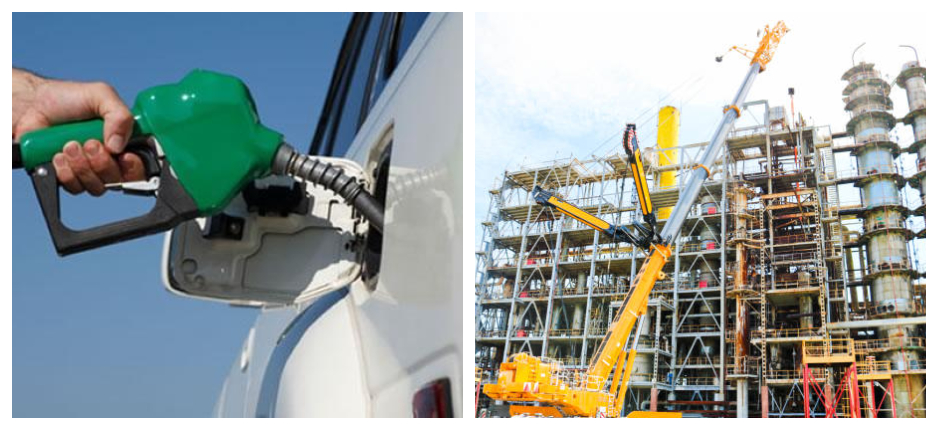
Reports show that no fewer than four vessels occupying imported Premium Motor Spirit, arrived at the seaports situated along the nation’s borders from the start of October till date.
This is as shown in a document obtained by journalist from the Nigerian Port Authority on Sunday, stating that about 123.4 million liters of PMS were berthed at two seaports to improve fuel supply in the country.
The dealers had stated that the supply from the Lekki-based plant was currently insufficient to meet domestic demand and supply.
It was earlier alleged that the plant was producing about 10 million liters of petrol daily, as against the 25 million liters that it was earlier promised to produce.
Last month, a media organization in the country, also reported that dealers imported about 141 million liters of Premium motor spirit following an increase in the pump prices of petrol produced by the Dangote Petroleum Refinery and released by the Nigerian National Petroleum Company Limited.
They stated that the fair market price following the full deregulation of the downstream oil sector by the government gave allowance for importation of petrol, with some analysis of the document showing that the commodities landed at the Apapa port in Lagos and the Calabar port in Cross River State.
The first shipment carrying 35,000 metric tonnes of PMS allocated to the West African Port Services berthed at terminal ASPM jetty on Friday, October 18, at 10.13 am, followed by 37,000 metric tonnes of fuel assigned to Internship at 3.37 pm, also berthing at terminal ASPM jetty.
Also, exactly 3:59 pm of the same day, another vessel carrying 10,000 metric tonnes of fuel berthed, with it being assigned to Peak Shipping as its agent.
The Calabar port, also hosted a vessel carrying 10,000 metric tonnes of fuel arriving at the Eco marine terminal on Sunday at 8:02 am, showing that the four vessels brought in 92,000 metric tonnes.
This therefore, implies that the marketers brought in about 123.4 million litres of petrol.
The spokesperson of the Nigerian Midstream and Downstream Petroleum Regulatory Authority, George Ene-Ita, when reached out to by journalists, said that marketers with approved import licenses were free to import PMS, while also stressing that the products must be subjected to three major tests by the agency.
‘’The products must be subjected to our testing protocols at the ports. The products must conform to stipulated standards before we authorize them to offload to their terminals’’
“Also, before the smaller vessels bring it further inland to Nigeria, our people will fly to the place to see the product and carry out some tests to ensure the right specification is upheld.
“Tests are also done at the products’ origins. And when the products come in before they are released to the market, further tests would be conducted to ensure that they meet the specifications,” he said.