

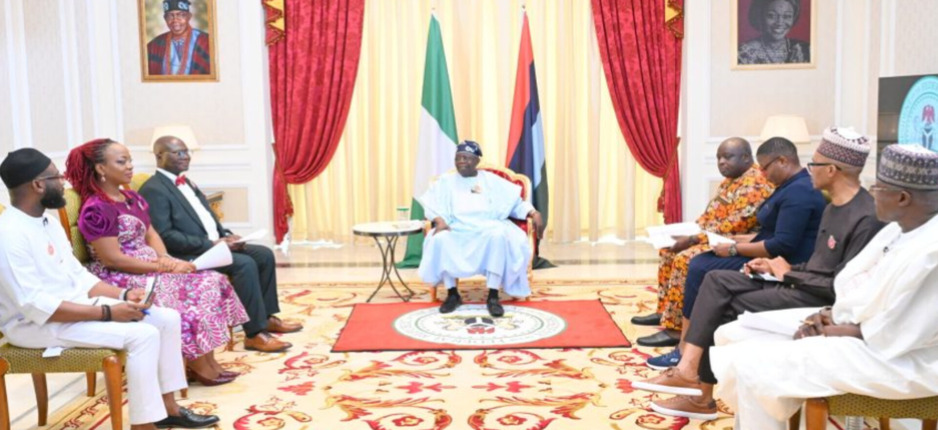
It was nice to see President Bola Tinubu in his first presidential media chat after being in office for 18 months. Although not a constitutional requirement for a sitting president but over time, civilian presidents have seen the need to interface with the media using such a forum to explain key policies of their administration.
Since he took over, Tinubu's only live appearance before the cameras has been his periodic nationwide broadcast. There has not been any opportunity for the media to take him up on his administration’s polices, projects, and programmes. So, it was a good moment for the selected journalists who featured in the media chat and for the number of Nigerians who watched that episode.
Surprisingly, Tinubu looked relaxed, well-composed, calm, and collected throughout the live chat. There was nothing that suggested that he was not prepared for the session. The way he answered the fielded questions from the panelists, was a further confirmation that it wasn't the Tinubu we saw during the 2023 presidential campaign that led to the infamous "balablu" statement, among other gaffes.
Tinubu's calm and composed nature during the chat was a far departure from the expectations of some of his critics who were on the lookout for major slips. Journalists, particularly those operating online, were waiting to craft a sensational headline from his flops. But he disappointed all of them. The president's demeanor suggested a sense of assurance and conviction that he was in charge of his government and running things.
The president's composure was not all that the media chat was about. While it lasted, he addressed various topics, including his decision to remove fuel subsidies, tax reforms, and security concerns. It was a wide range of submissions, and it was timely that he addressed them, giving the mood of the country.
On the issue of tax reforms, everyone who listened to him will be in total agreement that Nigeria’s tax laws are archaic and need to be reviewed. His administration's bold move in that direction will widen the tax net and relieve the lowly-paid workers.
As of today, Nigeria has one of the lowest tax ratios in the world. The African average is 15 percent, which is what the World Bank recommends, but Tinubu is targeting 18 percent by 2026. So, his reforms are tailored to achieve that target.
Aside from tax, he also expressed confidence in his security architecture. This is one area many Nigerians will not agree with him. Kidnapping, banditry, farmers/herders clash, and other violent crimes have made Nigeria an unsafe place to live and do business. No region is safe. A recent report showed how trillions of naira have been made from kidnapping all because of the weak security system in the country.
Also, President Tinubu praised himself for his effort at fighting corruption. He, among other cases, cited the seizure of 753 duplexes in Abuja from an individual. While some appreciable steps have been taken, the fact remains that his government has been enmeshed in corruption. Some members of his cabinet have been accused of grand corruption but yet shielded for some reasons, mainly political.
Defending his government's borrowing habits, Tinubu said it was mainly to fund infrastructure and, therefore, not a crime. This explanation is weak and lame. He should know that debt servicing alone is suffocating us. Borrowing rather than creatively thinking how to generate revenue from non-oil sources should have been better. We just cannot continue to borrow to fund projects.
In all, President Tinubu had a good outing, but he needs to walk the talk to rescue the country from corrupt officials and other criminal elements. He also needs to work harder to make Nigerians have a better life. Our hope is that he will find more time to engage the media and build public trust that seems to be eroding.