



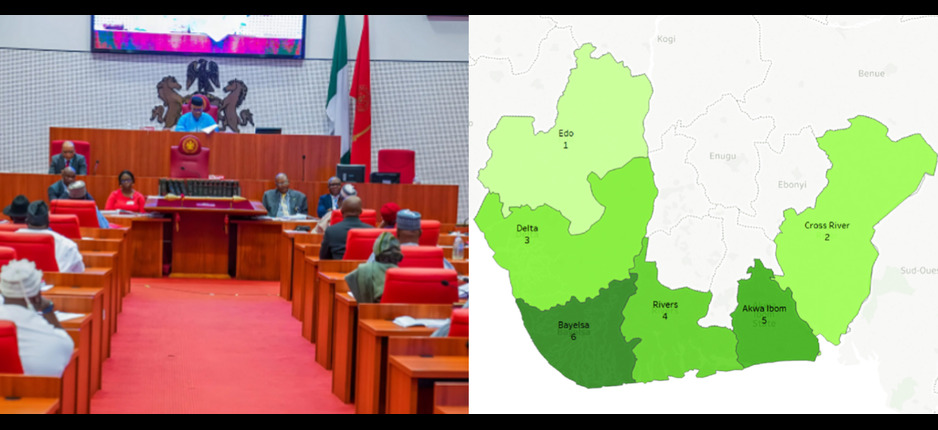
The Senate has reignited the debate over the contentious South-South Development Commission Bill, which was previously suspended in July after significant pushback from lawmakers. In a surprising turn of events, discussions resumed on Thursday, as senators rallied around the principle that every region deserves its own development commission.
Initially introduced by Senator Asuquo Ekpenyong, who represents Cross River South, the bill faced stiff opposition three months ago. Critics argued that establishing a separate commission for the South-South would duplicate the functions of the Niger Delta Development Commission (NDDC), which is already tasked with similar objectives. However, a fresh wave of support has emerged, prompting a reconsideration of the bill's merits.
In Thursdays plenary, Ekpenyong stated, “Some may ask, isn’t the Niger Delta Development Commission already fulfilling these functions? Distinguished colleagues, let me explain why the proposed South-South Development Commission is both distinct and necessary. The NDDC is a multi-regional body that includes states like Abia and Imo from the Southeast and Ondo from the Southwest.
“However, both of these regions now have their own dedicated development commissions, the Southeast Development Commission and the Southwest Development Commission.
"This setup has diluted the focus and resources of the NDDC, making it less effective in addressing the unique challenges of the South-South.”
He noted, “Another key difference lies in how funds are allocated. The NDDC allocates resources based on oil production, which has led to unequal development, with higher oil-producing states receiving a disproportionate share of resources.
“The South-South Development Commission will ensure equality in resource distribution among member states, focusing on regional development rather than just oil revenue. Funding will come from various streams, including federal allocations, international grants, and developmental partnerships.”
The bill was seconded by Senator Seriake Dickson (PDP, Bayelsa West), who also presented compelling arguments that persuaded senators across party lines and geopolitical zones to support the initiative.
Dickson added, “The NDDC is a resource-based commission that addresses environmental degradation caused by oil exploration across the oil-producing states, covering the South-South, Southeast, and Southwest. Unlike the NDDC, which serves a broader mandate, the South-South Development Commission will specifically target the developmental, economic, and ecological challenges facing the South-South region.”
As the debate unfolded, nearly ten senators stepped forward to champion the bill, asserting that the proposed South-South Development Commission would focus on development initiatives rather than the resource-based framework of the NDDC. Advocates emphasized the unique needs of the South-South region, arguing that tailored solutions are essential for fostering sustainable growth and addressing specific local challenges.
Conversely, some lawmakers, such as Senator Karimi from Kogi West, raised concerns about the exclusion of other oil-producing states from such initiatives. Senator Karimi suggested that Kogi, along with states like Bauchi, should also be represented under the NDDC umbrella, reflecting the broader distribution of resources across the nation. This perspective highlights the complex dynamics at play as lawmakers navigate regional interests and national development strategies.
The Deputy Senate President further echoed this sentiment, proposing that the NDDC’s name be amended to encompass additional oil-producing states. This suggestion underscores the ongoing debate about how best to manage development efforts in Nigeria's oil-rich regions and ensure equitable resource allocation.
With the bill successfully passing its second reading, it has been referred to the Committee on Special Duties, which is expected to provide a report within a week. The urgency of the committee's review reflects the growing momentum behind the proposed commission and the need for a robust framework that can effectively address the developmental challenges facing the South-South region.
As the discussions continue, the stakes are high for both supporters and detractors of the bill. For proponents, the South-South Development Commission represents a critical step towards enhancing regional development and autonomy. For opponents, the focus remains on the potential redundancy of such an initiative and its implications for existing commissions like the NDDC.
The renewed debate in the Senate promises to reshape the discourse on regional development in Nigeria, and all eyes will be on how lawmakers navigate this complex issue in the coming days. Will the South-South finally secure its dedicated commission, or will concerns over duplication and resource allocation derail the bill once again? The answer remains to be seen as the Senate grapples with these pressing questions.