


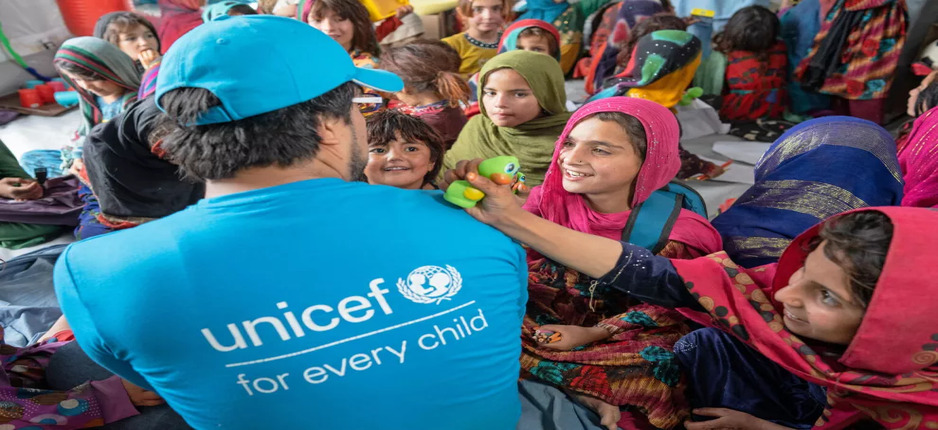
According to the United Nations International Children’s Emergency Fund ( UNICEF) Sub-Saharan Africa is one of the most dangerous places recorded for girls globally.
The reports gathered shows that the region has the highest number of victims, with 79 million girls and women affected (22 per cent), followed by 75 million in Eastern and South-Eastern Asia (8 per cent), 73 million in Central and Southern Asia (9 per cent), 68 million in Europe and Northern America (14 per cent), 45 million in Latin America and the Caribbean (18 per cent), 29 million in Northern Africa and Western Asia (15 per cent), and 6 million in Oceania (34 per cent).
This is coming from their recent report placed on their X handle on Thursday,
UNICEF estimates that globally, around 370 million girls and women have been victims of sexual violence, with approximately one in five in sub-Saharan Africa suffering abuse before the age of 18.
Earlier, the UNICEF Executive Director Catherine Russell in her words said that, : “Sexual violence against children is a stain on our moral conscience.”
A child violence advocate based in Nairobi, Nankali Maksud, said that the trauma endured by survivors has marked significant consequences on development efforts, especially education.
He further Emphasized on the negative impacts that the abuse has brought to the region, saying that :“It is generations of trauma.”
He said that “We’re pushing to get girls into school, but a girl who has been raped or assaulted struggles to learn.”
Regions experiencing conflict and insecurity, such as Sudan, see the highest rates of sexual violence, and aid agencies have continuously raised alarms about the heightened risks for women and girls.
The recent data, compiled from national statistics and international surveys conducted between 2010 and 2022, aims to bring visibility to the scale of the crisis, despite inevitable gaps and underreporting
The United Nations Children's Fund (UNICEF), originally known as the United Nations International Children's Emergency Fund, was created by the United Nations General Assembly on 11 December 1946, to provide emergency food and healthcare to children and mothers in countries that had been devastated by World War II.
In 1950, UNICEF's mandate was extended to address the long-term needs of children and women in developing countries everywhere, but in 1953 it became a permanent part of the United Nations System, and the words "international" and "emergency" were dropped from the organization's name, though it retained the original acronym, "UNICEF".