


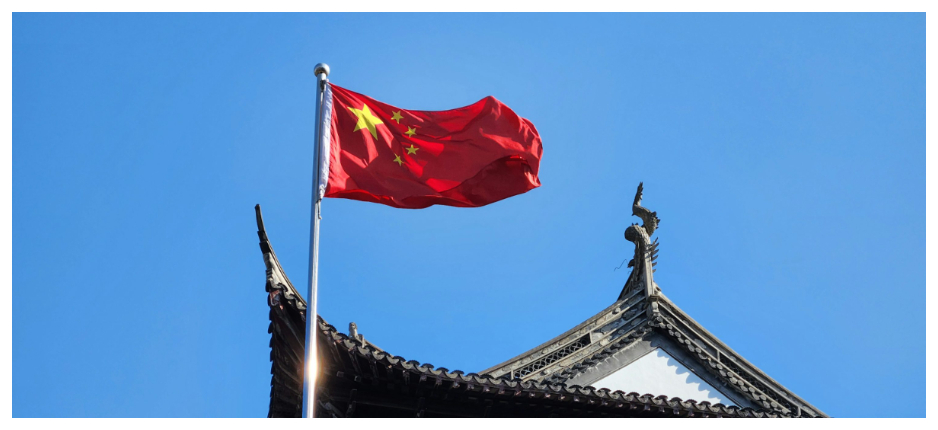
China has test-launched an intercontinental ballistic missile, firing it into the Pacific Ocean in a rare trial run that showcased its military might.
The test-run of the missile into the pacific by China occurred in the early hours of today Wednesday, the 25th of September,2024.
The nation has stepped up its nuclear development in recent times, with the Pentagon’s warning to China last October which its arsenal have developed more rapidly than what the United States had earlier anticipated.
According to reports, China has in possession more than 500 operational nuclear warheads as of May 2023 and is likely to have more than 1,000 by 2030.
In a statement released by the Chinese defense military, it says : “Rocket Force launched an ICBM… carrying a dummy warhead to the high seas in the Pacific Ocean at 08:44 on September 25, and the missile fell into expected sea areas’’.
According to Ankit Panda, Stanton Senior Fellow at the Carnegie Endowment for International Peace, he said that missile lunch by China is the first in decades.
“This is extremely unusual and likely the first time in decades that we’ve seen a test like this,” said
“(The test) likely speaks to China’s ongoing nuclear modernization manifesting in new requirements for testing ” he said.
China’s defence ministry, further added that, called the firing a “routine arrangement in our annual training plan”, stressing that it aligns with the laid down law practices because the launch wasn’t directed at any country in particular.
“It is in line with international law and international practice and is not directed against any country or target,” it said.
China, since its first nuclear test in 1964, has been content to maintain a comparatively modest arsenal and has maintained that it will never be the first to use nuclear weapons in a conflict.
However, in recent times, under President Xi, it has begun a massive military modernization drive that includes upgrading its nuclear weapons to not only deter foes but also be able to counter-attack.
Beijing’s secretive Rocket Force, which was in charge of Wednesday’s test and oversees the country’s nuclear arsenal, has also been the target of an aggressive, wide-ranging anti-graft campaign.
The US and China in November held rare talks on nuclear arms control, which was aimed at easing mistrust ahead of a summit between the country leaders Joe Biden and Xi Jinping.
But in July, Beijing said it had halted on negotiations with the United States on nuclear non-proliferation and arms control in response to Washington’s weapons sales to Taiwan.
According to annual reports, the Stockholm International Peace Research Institute (SIPRI) listed China as having the world’s third-largest stockpile of nuclear warheads, behind Russia and the United States.
This year, Beijing announced it would increase its defence budget by 7.2 per cent, as China increasingly squares off with the United States and its regional partners from the South China Sea to Taiwan.
Read More