


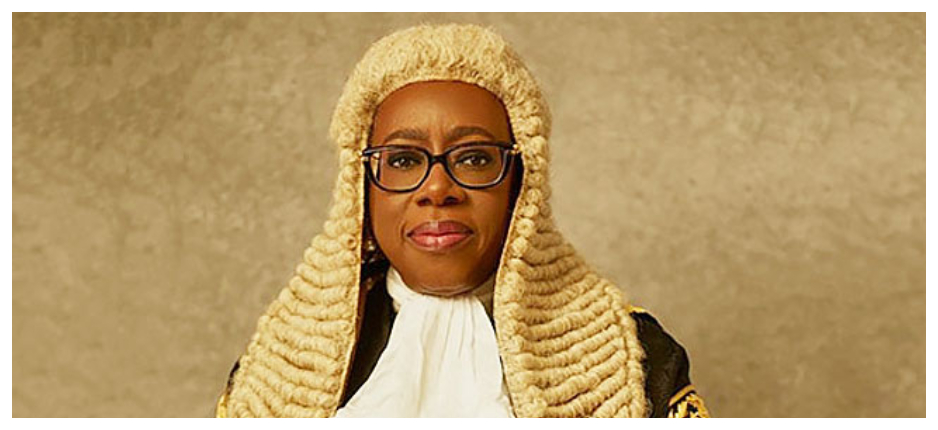
In a passionate address at the third annual National Judicial Council (NJC) conference in Abuja, Chief Justice of Nigeria (CJN) Justice Kudirat Kekere-Ekun issued a stark warning about the troubling state of the Nigerian judiciary. She condemned the alarming trend of judges delaying verdicts, emphasizing that such practices could severely erode public confidence in the legal system.
“The growing backlog of cases is simply unacceptable,” the CJN stated, addressing judges and judicial officials. She highlighted a concerning statistic: some judicial officers failed to deliver even a single judgment in the last quarter, contributing to a burgeoning crisis that could undermine the very foundation of justice in Nigeria.
Kekere-Ekun’s remarks come against a backdrop of escalating case numbers in the country’s courts. “As of the first quarter of 2024, there are 243,253 cases pending in our superior courts of record, excluding the Supreme Court,” she revealed. This staggering figure includes 199,747 civil cases and 43,506 criminal cases, a situation that demands immediate action.
The CJN stressed the urgent need for judges to confront this backlog head-on. “We cannot continue to do things the same way and expect different results,” she warned, imploring judicial officers to take the matter seriously. “We must re-focus our attention towards enhancing our judicial performance.”
Kekere-Ekun urged the adoption of modern technologies to improve efficiency within the judiciary. She advocated for innovative case management solutions, such as digital filing systems and virtual courtrooms, to streamline processes and reduce delays. “The introduction of digital case management systems, judicial performance evaluation software, and online resources provides us with the tools needed to enhance case disposition,” she noted.
Furthermore, the CJN encouraged the exploration of alternative dispute resolution methods, like mediation and arbitration, as effective ways to expedite case resolutions and lighten the burden on judges. “These strategies promote faster resolutions and alleviate the workload on our judicial system,” she explained.
The Chief Justice’s call to action resonates deeply with a public frustrated by prolonged legal battles and a backlog that often leaves justice hanging in the balance. As the judiciary grapples with these pressing challenges, her passionate plea for reform serves as a crucial reminder of the need for accountability, efficiency, and innovation in Nigeria’s legal landscape.