


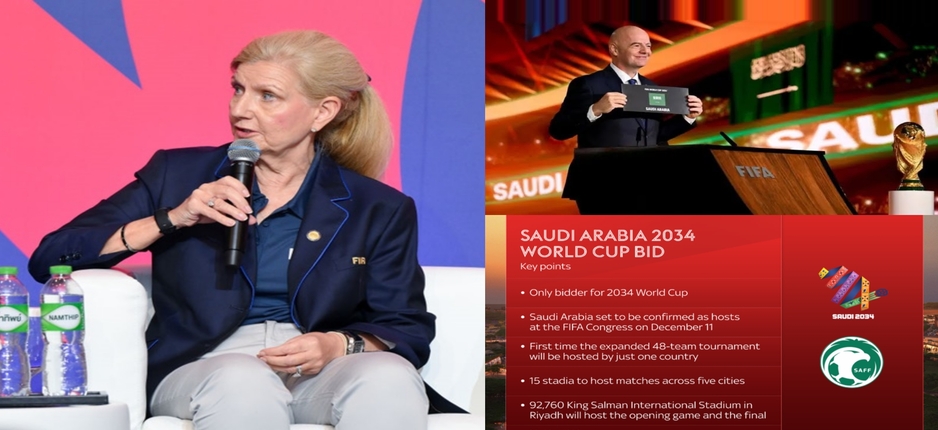
The English Football Association (FA) has announced its support for Saudi Arabia's successful bid to host the 2034 FIFA World Cup, following a detailed meeting with the Saudi Arabian Football Federation (SAFF) in November. Debbie Hewitt, the chair of the FA, revealed this endorsement on Friday, citing the reassurances and commitments the English body received from Saudi officials.
FIFA officially confirmed Saudi Arabia as the host of the 2034 World Cup on Wednesday, awarding the Kingdom the tournament after it was the only nation to submit a bid. This marks another major step in Saudi Arabia's ambitious push to establish itself as a global sporting hub. However, the announcement has not been without controversy. Rights organizations and activists have raised serious concerns about Saudi Arabia's human rights record, especially regarding the treatment of women, LGBTQ+ individuals, and political dissenters. Critics argue that the Kingdom’s investment in sports, largely funded through its Public Investment Fund, is part of a broader effort to "sportswash" its reputation internationally—using sports to divert attention from its human rights issues.
Despite these criticisms, the Saudi government maintains that it is committed to human rights, framing its legal framework as essential for protecting national security and societal order. In response to these concerns, the FA’s decision to back Saudi Arabia’s bid was influenced by the answers provided during the meeting with the SAFF, which took place ahead of the official announcement.
Hewitt emphasized that the decision was not taken lightly but was the result of a thorough and comprehensive evaluation process. “It wasn’t a difficult decision,” she said in an interview with the BBC. “We spent a lot of time with the Saudis, understanding their approach to the tournament. We asked a lot of questions, they gave us a lot of time, and they gave us a lot of commitments.”
For the FA, the key takeaway from the discussions was that the partnership between the host country and participating nations, including England, would be collaborative. “We will now work with them over the next 10 years leading up to the tournament to make sure that those commitments are delivered—on both sides,” Hewitt explained. This long-term cooperation is intended to ensure that the World Cup in Saudi Arabia is not only a successful event but also one that fosters positive engagement between the Kingdom and the global football community.
The FA’s endorsement of Saudi Arabia's World Cup bid comes after a period of scrutiny regarding the association's stance on issues of human rights in football. In 2022, the FA joined other European football federations in planning to wear "OneLove" armbands during the World Cup in Qatar as a statement against discrimination. However, those plans were shelved after FIFA warned of potential sporting sanctions. With the announcement of Saudi Arabia’s hosting rights, the FA is once again navigating a complex balance between supporting the sport’s global development and addressing ethical concerns raised by its wider involvement in the event.
As the world gears up for the 2034 World Cup, it remains to be seen how Saudi Arabia’s vision for the tournament will unfold and how it will handle the spotlight that comes with hosting such a prestigious global event. Meanwhile, the FA has indicated its readiness to work with the Saudi authorities to ensure that the tournament adheres to the highest standards of fairness and inclusivity.