


Legal experts, labour unions, women and youth groups, civil society organizations, the Nigerian Bar Association (NBA), and other professional bodies have, in strong terms, condemned the proclamation of a state of emergency in Rivers State by President Bola Tinubu.
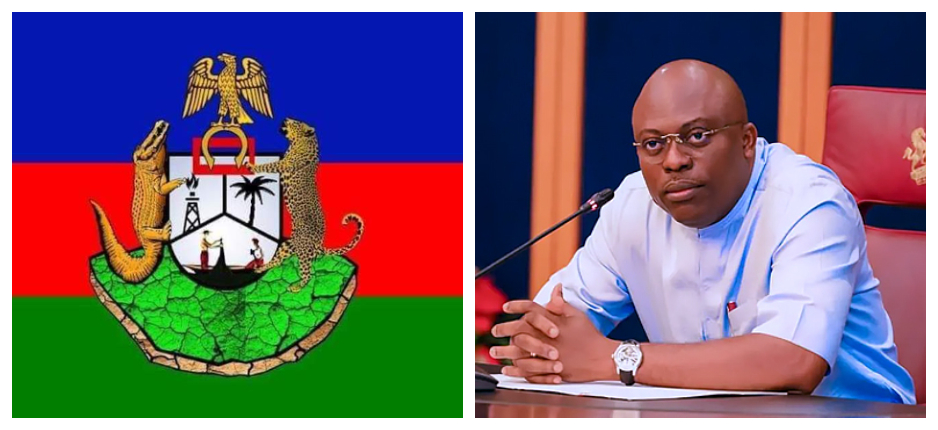
The President, in a statewide broadcast on Tuesday, March 18, 2025, announced the emergency rule, suspending the state governor, Siminalayi Fubara, his deputy, Mrs. Ngozi Ordu, and members of the State House of Assembly for "an initial period of six months."
The decision, according to the President, was to arrest the growing tension and insecurity that the festering political crisis in the state was brewing. He also said the timely intervention would restore normalcy and bring the gladiators under control. He went further to hinge his action on the security report before him, stating that no responsible president would watch the unfolding events and not take steps to nip them in the bud before they escalate.
Tinubu's decision was hasty and ill-timed. It was overreaching. No matter how pure he claimed his intentions were, declaring a state of emergency in a state with no form of war other than a fight between political actors undermines the institution called democracy. More so, suspending two main arms of government and appointing a sole administrator is not only illegal but gives him away as an emerging civilian dictator.
Yes, Section 305 of the 1999 Constitution (as amended) empowers the President to take extraordinary measures to restore law and order if, among other reasons, there is an actual breakdown of public order and public safety in the Federation or any part thereof to such an extent as to require extraordinary measures to restore peace and security, or if there is a clear and present danger of such a breakdown requiring extraordinary measures to avert it.
However, the extraordinary measures which the Constitution talks about that may be adopted by the President to restore peace and security in the Federation or in any particular state do not include the suspension of an elected Governor, an elected Deputy Governor, or the dissolution of a State House of Assembly. Where then did he draw that power from?
The President's claim that he met with the combatants twice to resolve the issue but was unsuccessful was another executive balderdash. If he could intervene and stop the recent political crisis in Lagos State which saw the restoration of the impeached Speaker of the House of Assembly, Rt. Hon. Mudashiru Obasa, why was the case of Rivers State different? It is easy to see the bias in the President's action. He could not even hide it to show neutrality.
In his broadcast, he repeatedly blamed Governor Siminalayi Fubara for the crisis, accusing him of sundry crimes including deliberately destroying the State Assembly complex, covertly working with militants to blow up oil installations and facilities, and so on. The President did not mention the name of his FCT Minister, who the whole world knows is the main architect of the crisis. This is why, in the camp of Nyesom Wike, there is wild jubilation over the proclamation.
Shamefully, the Attorney-General and Minister of Justice, Lateef Fagbemi, and Defence Minister, Bello Matawalle, have all been justifying their boss's actions. They have, like Tinubu, blamed Fubara for the political turmoil. This is not only absurd but unfortunate.
Since the political logjam broke out in the state, at no time has the President cautioned the Minister to stop stoking the fire of crisis. Wike has been consistent in his outbursts, abusing respected leaders across the country and ethnic groups because they refused to be on his side. Against all odds, he stormed Abalama, an Ijaw community in Kalabari, Rivers State, penultimate weekend to continue his insult on Ijaw leaders. His frequent and needless media chats have become one of his many avenues to speak recklessly, yet he gets a pat on the back.
The National Assembly had the moment before them to make history, but as usual, they threw it away by using a voice vote to support the rape of democracy. Only a few members, like Distinguished Senator Henry Seriake Dickson, kicked against it. History will always be kind to them. They remain true symbols of democratic ethos.
It is sad that Tinubu, who in the past had strongly condemned the imposition of a state of emergency, would make a U-turn to now proclaim it. It shows clearly that what he did then as an opposition leader was mere grandstanding. He was not sincere in speaking truth to power but simply playing decorative politics.
The February 28, 2025, Supreme Court judgment, which was seen by many as controversial, exacerbated the impasse. The apex court's far-reaching decisions, including reinstating the 27 lawmakers who had openly defected from the Peoples Democratic Party to the All Progressives Congress and stopping the monthly allocation to the state, were enough to embolden the pro-Wike belligerent lawmakers.
Our fear is that, just like the 2004 and 2006 illegal dissolutions of democratic structures by then President Olusegun Obasanjo in Plateau and Ekiti States, when the Supreme Court refused to determine the constitutional validity of the dissolution on the grounds that the suit was procedurally incompetent, because it was instituted during the six-month emergency period by the suspended legislators in the name of Plateau State without the authorization of the Sole Administrator, this could be used as a precedent to scuttle this case. Otherwise, it is a very straightforward matter that does not require a long judicial process to dispense with. We applaud the PDP governors for proceeding to court to challenge the emergency rule and the suspension of their colleague, Siminalayi Fubara. We urge all well-meaning Nigerians, groups, and those concerned about Nigeria’s democracy to rise up against this injustice, political manipulation, and outright lawlessness of Tinubu, Wike, and their cohorts.
Those who support this evil because they currently benefit from it, or because it favours them, will one day cry blue murder when they are affected. By this strange action, it will not be surprising that in the future, presidents will use emergency rule to undermine sub-national governments. The governors of Edo, Monday Okpebholo, and Cross River, Bassey Otu, distanced themselves from their colleagues and supported Tinubu, just like their Imo State counterpart, Hope Uzodinma. An old proverb says that when it rains, it is always on the roof of everyone, and not just one person.
Tinubu should be careful. For someone who will be seeking re-election in 2027, he is becoming unpopular. He still has time for restitution. We therefore call on him to follow the path of constitutionalism and honour without any delay. The President should proceed to reinstate Fubara and his deputy and restore all the democratic institutions in Rivers State. This call is without prejudice to the duty imposed on the President to adopt extraordinary measures to restore law and order in any state when necessary.