


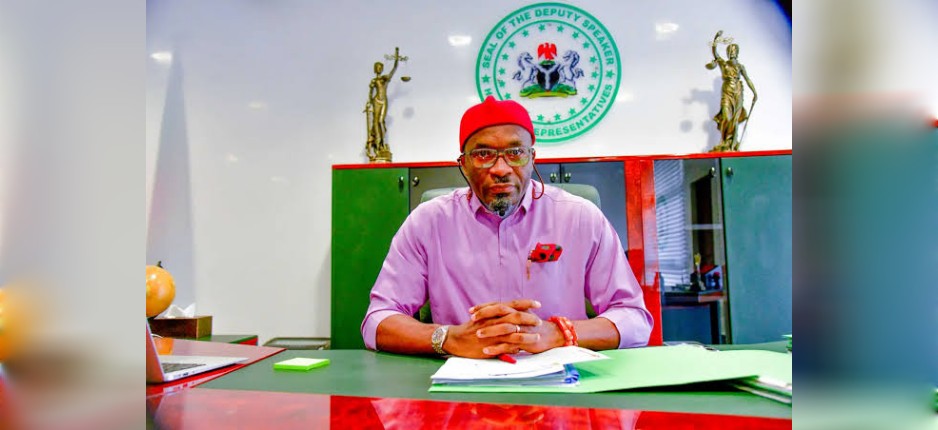
Deputy Speaker of the House of Representatives, Rt. Hon. Benjamin Kalu, has called for immediate intervention from the government and international non-governmental organizations (INGOs) to address the worsening humanitarian crisis in Nigeria's South East region. The region is home to over 268,000 internally displaced persons (IDPs), currently living in 158 camps and affected communities due to ecological and human challenges.
Speaking at a roundtable discussion in Abuja, themed “Through Their Eyes: A Call to Action,” Kalu emphasized the need for collaborative efforts to provide sustainable solutions to the crisis. He noted that the displaced persons are grappling with limited access to basic necessities, including food, shelter, and healthcare, exacerbated by environmental degradation and other socio-economic factors.
The event featured a documentary that highlighted the dire living conditions of IDPs in the region, which drew strong reactions from stakeholders. Representatives from various agencies, including the National Refugees Commission, National Social Investment Programme Agency, and Nigeria Hydrological Services Agency, expressed concern over the scale of the crisis.
Stakeholders called for an increase in the 2025 budgetary allocation to relevant agencies, emphasizing the need for adequate funding to address the challenges effectively. They also pledged their commitment to collaborate with Kalu’s office to ensure a coordinated response that prioritizes resilience and sustainable development.
Camilla Higgins, Director General of an international NGO, stressed the importance of fostering partnerships to enhance the capacity of local agencies in handling humanitarian emergencies. Dr. Badamasi Lawal, National Coordinator of the National Social Investment Programme Agency, echoed similar sentiments, urging for stronger institutional frameworks to address the plight of displaced persons.
The Deputy Speaker reiterated his commitment to using his office to mobilize resources and advocate for policies that would alleviate the suffering of those affected. He urged all stakeholders to prioritize the well-being of displaced persons and to work collectively towards addressing the root causes of displacement in the region.
The roundtable served as a platform to galvanize support, foster deeper partnerships, and engender resilience to mitigate the challenges facing the South East. Participants agreed that a multi-stakeholder approach was essential to delivering sustainable solutions to some of Nigeria's most pressing ecological and humanitarian issues.
With continued advocacy and support, it is hoped that the plight of over 268,000 IDPs in the South East can be alleviated, restoring hope and stability to the affected communities.