


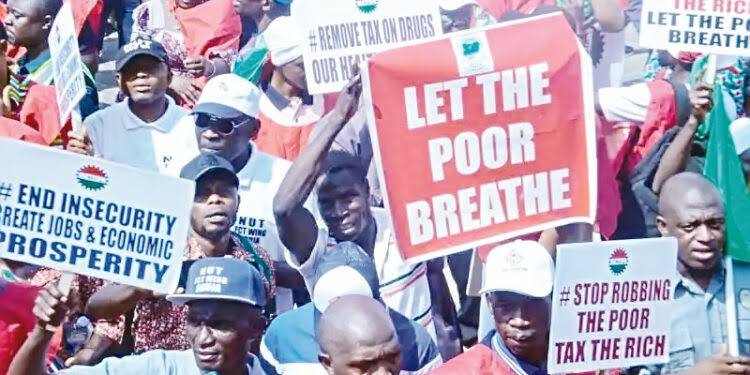
The #EndBadGovernance protest ended last Saturday bringing some respite to all Nigerians, particularly the political class, who were ostensibly the main target of the massive protest. It was one week of fear, anxiety, and trepidation as the country was again brought to its throes. It was again days of rage, reminiscent of the October 2020 EndSars protest that rocked Nigeria.
Businesses, government, and private institutions and establishments were shut down, crippling the already precarious economy. Streets and major roads were deserted, and motor parks, airports, and other public places experienced low patronage. All of these highlighted the deep-seated frustration of the people, manifesting their grievances of the mismanagement of the nation's common wealth. In Naira and kobo, it was a huge loss for Nigeria.
Nigerians, especially those within the youth age bracket, led the nationwide demonstrations. In some places, it was largely peaceful, while in other areas, there were violent clashes between security forces and the protesters, leading to the unfortunate death of some people. There were also sponsored counter-protests, one of the gimmicks of the government to water down the protest. It was a failed venture that was highly unnecessary.
It was obvious that the government didn't manage the situation very well. Having failed to stop the protest, there should have been a strategy to contain it and get the best out of it. But sadly, the crackdown and clampdown of the peaceful protesters showed the level of intolerance on the part of the government. There were reports of human rights abuses across the country, which further compounded the situation. It also eroded public trust on the sincerity of the government to holistically address the issues that gave birth to the protest.
Despite the heightened tension occasioned by the protest, it took President Bola Tinubu three days to make a nationwide broadcast. This was after several appeals by well-meaning Nigerians. Unfortunately, the President's address fell completely short of expectations. The core issues of the protesters' demands were completely ignored. This was the view of many, including Nobel laureate, Professor Wole Soyinka, who also expressed worry over the deterioration of protest management by the government.
Tinubu's uninspiring address intensified the actions of the protesters. It reinforced their determination to continue the protest till the last day, and they did. It was a missed opportunity for the Nigerian leader to calm and assuage the feelings of the protesters. All they wanted was empathy and an assurance to address their demands. It was what a greater part of the speech should have been devoted to by the president and his handlers.
Now that normalcy has returned after the ten days civil unrest, it is a window of opportunity for the federal government to first review the issues across board. It is simple to denote that hunger should be top on the list. Everything should be done to reduce the level of hunger and starvation. The distribution of bags of rice is not the solution to solving the hunger problem. It is a drop in the ocean. Rather, we think that a series of welfare packages should be rolled out that will succinctly address the needs of the people. The government must ensure that such interventions get to those who are really in need. The target beneficiaries should be the vulnerable groups, not loyal members of the ruling party, as it has been seen in some states.
The government must also take a second look at some existing policies, chief of which is the controversial fuel subsidy removal, the hike in electricity tariffs, humongous cost of governance, and so on. In addition, quick-win projects should be created to benefit mainly the youths while more employment opportunities should be created for young graduates.
The Tinubu administration must also probe the financial impropriety of some government agencies, particularly in the oil sector. The monumental sleaze there has become one of the greatest problems in the country. Those found guilty must be made to face the law. All of these will bring hope and succor to the people that this present government is serious about making things work for their greater good.
It will be disappointing and a disaster for the government to see our streets and roads flooded again by agitators in another few weeks or months, protesting for the same issues. We believe that the next wave of protest may be too gruesome for the nation. The time, therefore, to act is now for the interest of the people of the Niger Delta and Nigeria.