


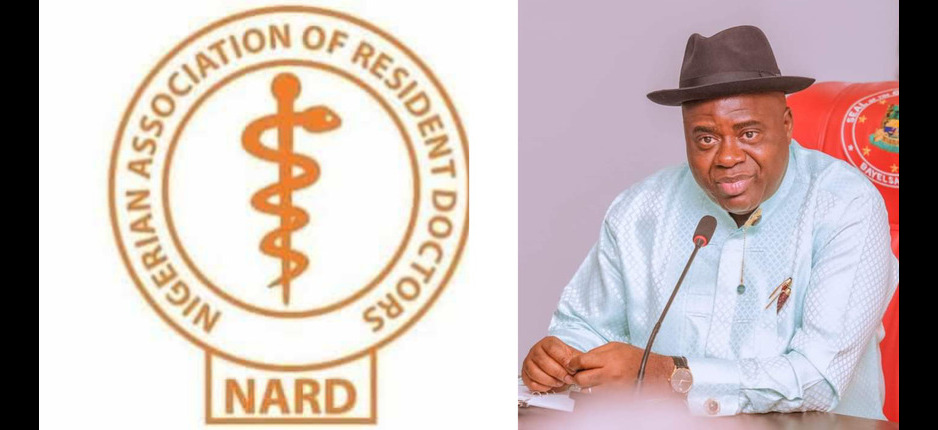
The National Association of Resident Doctors (NARD) has urged state governors across Nigeria, along with the Minister of the Federal Capital Territory, to domesticate the Medical Residency Training Act (MRTA) and ensure the payment of Medical Residency Training Funds (MRTF) to all resident doctors within their jurisdictions.
The association commended Governor Douye Diri of Bayelsa State for his proactive leadership in being the first to domesticate the MRTA, which guarantees a structured and well-funded training path for resident doctors in the state. In a show of appreciation, NARD's leadership lauded the Bayelsa State Governor, describing him as a role model for other governors to follow. The association encouraged other states to emulate this gesture by enacting and implementing similar policies to support their medical professionals.
Speaking at the close of NARD's week-long Annual General Meeting (AGM) held in Abeokuta, Ogun State, the National President of NARD, Dr. Temitope Osundara, emphasized the importance of domestication of the MRTA, highlighting the fact that many resident doctors across the country are currently funding their training programs out of pocket. This self-sponsorship, he noted, is unsustainable and contributes to the rising tide of brain drain in the health sector, as many young doctors opt to leave the country in search of better opportunities abroad.
"The Medical Residency Training Act is a crucial tool for ensuring that doctors receive the necessary training and support during their residency programs," Dr. Osundara said while reading the AGM communique. "It's disheartening that many states have yet to adopt this legislation, forcing our doctors to self-sponsor their training at significant personal cost. We once again applaud Governor Douye Diri for his forward-thinking approach in Bayelsa and implore other governors to follow his lead for the sake of their doctors and the future of healthcare in Nigeria."
Beyond advocating for the domestication of the MRTA, Dr. Osundara called on the federal government to prioritize the welfare of doctors across the nation. He reiterated that ongoing discussions with the Federal Ministry of Health should include prompt waivers and incentives for tertiary institutions, which could help mitigate the loss of skilled professionals to brain drain. He stressed that investing in doctors' welfare and residency programs would ultimately strengthen the nation's healthcare system.
The NARD president also emphasized the need for continuous engagement between resident doctors and relevant government bodies to address other longstanding issues within the healthcare sector. He pointed out that the brain drain crisis, which has seen a steady exodus of Nigerian doctors to more favorable countries, poses a significant threat to the country's healthcare infrastructure if not promptly addressed.
In a final call to action, NARD urged state governments to recognize the urgency of the situation and implement measures to domesticate the MRTA and guarantee timely and adequate funding for medical residents.