


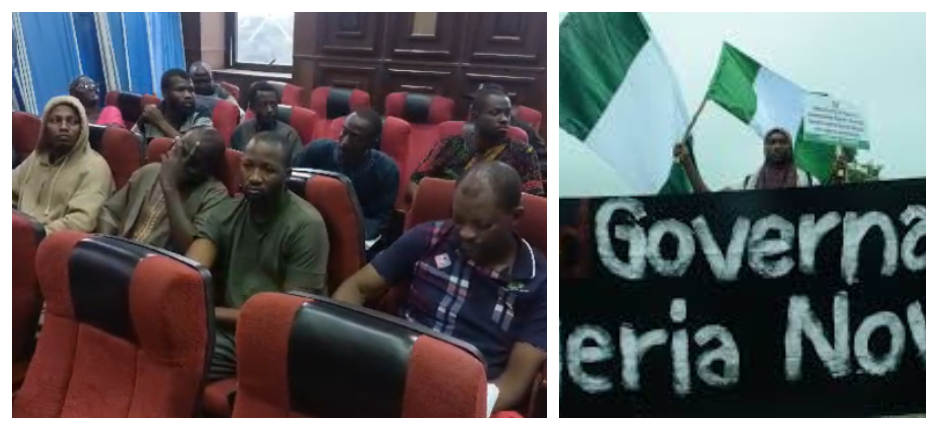
In a dramatic turn of events, ten protesters affiliated with the #EndBadGovernance movement were arraigned before a federal high court in Abuja on Monday. 2 September 2024.
The defendants, who were arrested in various locations across the country are facing treasonable felony charges and accusations of planning to destabilize Nigeria.
The protesters, who pleaded not guilty to the six counts filed against them, were brought to court amidst tight security. The defendants include Michael Tobiloba Adaramoye, Adeyemi Abiodun Abayomi, Suleiman Yakubu, Comrade Opaluwa Eleojo Simeon, Angel Innocent, Buhari Lawal, Mosiu Sadiq, Bashir Bello (Murtala), Nuradeen Khamis, and Abdulsalam Zubairu.
The protesters had earlier rejected the court order permitting their arrest and detention, arguing that President Bola Tinubu had no right to arrest them for exercising their right to protest. They challenged the August 22, 2024, court order in a suit marked FHC/ABJ/CS/1233/2024, claiming their right to protest was violated.
In an affidavit, the protesters stated that "protest is a right and, the president of the Federal Republic of Nigeria, Asiwaju Ahmed Bola Tinubu had led protests in the past without being harassed, detained or remanded". They alleged that their rights to life, dignity, health, and freedom of movement were threatened and violated by the police without justification.
Comrade Opaluwa Eleojo and 48 other protesters sued the Inspector General of Police, arguing that the motion ex-parte approving their remand was based on suppressed and misrepresented facts. They sought to vacate the exparte order and obtain bail.
The arraignment has sparked widespread outrage, with many Nigerians taking to social media to express solidarity with the protesters. The Nationwide Hardship government which was also tagged ; #EndBadGovernance movement has gained momentum in recent weeks, with protesters demanding improved governance and accountability from the government.
As the trial continues, concerns about the erosion of fundamental human rights and the suppression of dissenting voices have come to the fore. The Nigerian government has faced criticism for its handling of the protests, with many accusing the authorities of using heavy-handed tactics to silence critics.
The Applicants contend that the motion ex-parte constitutes a gross abuse of the court process, asking the court to set aside, discharge and or vacate the exparte order that approved their remand in prison for 60 days. They also sought an order from the court to grant them bail.