

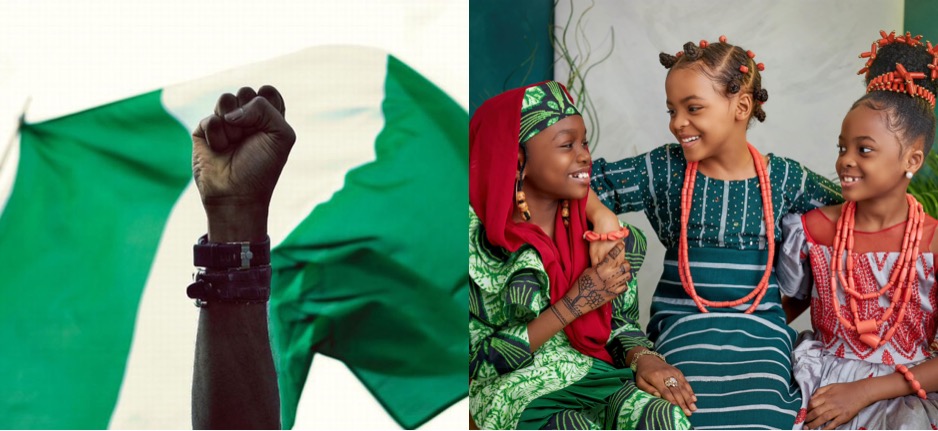
As Nigeria marks its 64th independence anniversary today, we are reminded of the profound words from our national anthem: “Though tribe and tongue may differ, in brotherhood we stand.” This ideal, however, often feels like an aspiration rather than a reality. With over 250 ethnic groups, two dominant religions that frequently clash, and a political system marred by mediocrity, Nigeria faces significant challenges. Yet, within these challenges lie opportunities for unity and growth.
Our rich diversity should serve as a foundation for intellectual and cultural strength, key ingredients for national development. Take China, which also celebrates its 75th anniversary today. Despite its vast land mass and population, China’s cultural diversity has not hindered its progress. Similarly, the United States thrives on its heterogeneous population, drawing strength from its varied backgrounds. These nations exemplify that diversity can be a powerful asset rather than a liability.
Despite ongoing criticisms from both friends and foes, Nigeria's immense social and economic potential remains undeniable. Home to one in four Black individuals globally, our wealth of human resources is a significant advantage. However, a lack of structural accountability often undermines our progress. The mechanisms intended to ensure good governance are either absent or insufficient at local levels, leading to a breach of the promise of decentralization.
As we reflect on our journey since independence, it is crucial to engage in a national conversation about strengthening our governance structures. To facilitate this dialogue, we must confront prevailing prejudices and misconceptions. The two largest religions in Nigeria; Christianity and Islam, originated elsewhere and should not serve as divisive forces. Likewise, while ethnic differences are prominent, few nations are truly linguistically homogeneous.
Calls for the dissolution of Nigeria along ethnic lines are misguided and ignore historical lessons. Many nations have experienced intra-tribal conflicts, revealing that cultural homogeneity does not guarantee peace. As we evaluate our achievements, we must also confront the uncomfortable reality: after 64 years of independence, are we truly free, or do we remain dependent on our colonial past?
Our nation’s identity is increasingly overshadowed by external influences, which often feel like a modern form of subjugation. Despite being rich in human and natural resources, Nigeria’s potential remains untapped, as these resources are often exploited by a select few. This has led to a cycle of debt and generational poverty that stifles national growth.
Who bears the responsibility for our current state, leaders or the led? And where are the youth, often touted as the leaders of tomorrow? It is imperative that these questions are addressed to foster the growth and development we desperately need. The future of Nigeria cannot wait; it must start today.
The current political leadership must focus on mobilizing and expressing the forces of integration. Emphasizing a collective Nigerian identity is essential. Those who represent various religious, ethnic, and regional interests must do so responsibly, ensuring their words foster unity rather than division.
The National Assembly plays a critical role in this endeavor, prioritizing genuine citizenship and redefining political and social rights based on residency rather than state of origin. Despite any misgivings about the amalgamation of 1914 or the military’s distortions of our federal system, Nigeria has made significant strides as a nation. It is time for all citizens to rise above tribal and artificial differences to collectively combat poverty, ignorance, and underdevelopment. The benefits of harmonious coexistence are profound and far-reaching.
As we celebrate this anniversary, let it serve as a clarion call for introspection and renewal. We must evaluate our achievements and chart a path forward, embracing our diversity as a strength rather than a weakness.
Happy 64th Anniversary, Nigeria! May we unite in purpose and action to secure a brighter future for all.