


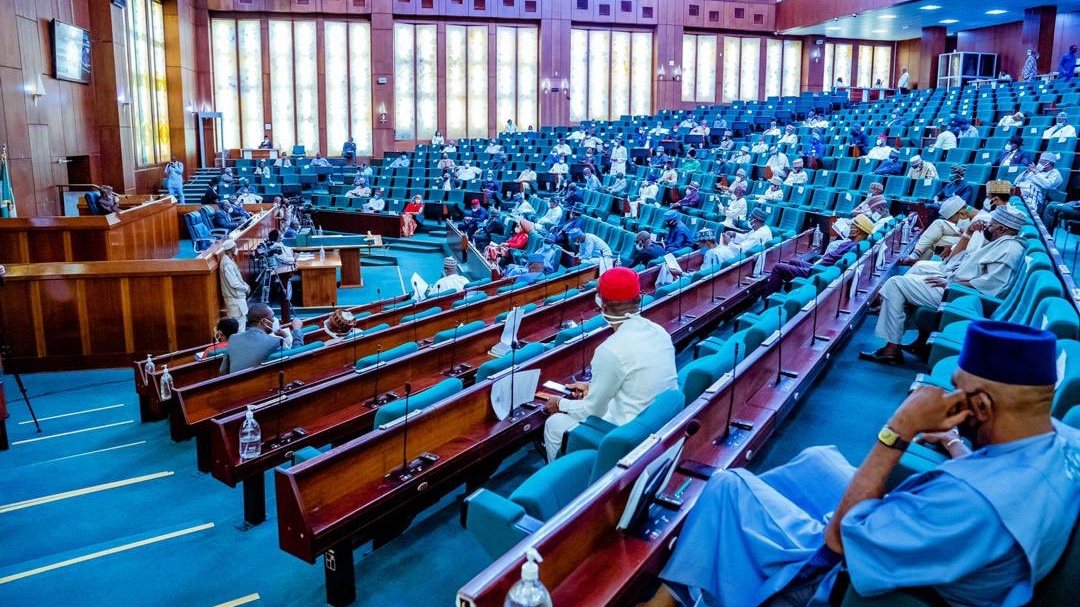
The federal government's intentions have come under scrutiny with the recent emergence of a controversial anti-protest bill, which scaled the second reading at the House of Representatives.
The bill has sparked widespread concerns and debates across the country, particularly among human rights activists and citizens from various sectors.
It would be recalled that the House of Representatives on May 4, 2023, passed the second reading of the bill, which proposes a five-year prison sentence for individuals involved in illegal protests in Nigeria.
The bill, introduced by Mr. Emeka Chinedu Martins (PDP-Imo), aims to amend the Criminal Code ACT, CAP 38, Federal Law of Nigeria, 2004, and seeks to impose penalties on those who participate in unlawful assemblies to protect human life and property.
The bill defines an assembly of three or more people as not unlawful if it is meant to protect a house from break-ins and felonies.
It further stipulates that anyone participating in a "riot" is guilty of a felony and could face up to three years in prison, adding that those involved in "mob actions" could be sentenced to life imprisonment.
The anti-protest bill includes provisions for a N4 million fine or a two-year prison sentence for anyone convicted of insulting, defaming, embarrassing, or discrediting the leadership of a community, religion, lawful group, local government, state, or federal government.
The bill has sparked further controversy with its stipulation that those found guilty of destroying national symbols or refusing to recite the national anthem and pledge could face a 10-year prison sentence, a fine of N5 million, or both.
In response, several Nigerian human rights activists and social media influencers have criticized President Bola Ahmed Tinubu and Senate President Godswill Akpabio, accusing them of attempting to suppress the rights of Nigerian citizens.
The recent change to the Nigerian national anthem under President Tinubu's administration has not been fully accepted by the public, raising concerns of a drift towards authoritarianism.
Popular Nigerian political activist, Aisha Yesufu tweeted her take on the bill on her X (formerly Twitter) account saying patriotism cannot be forced and that she would rather serve a 20-year jail term than sing the “Tinubu’s national anthem”.
Read more