


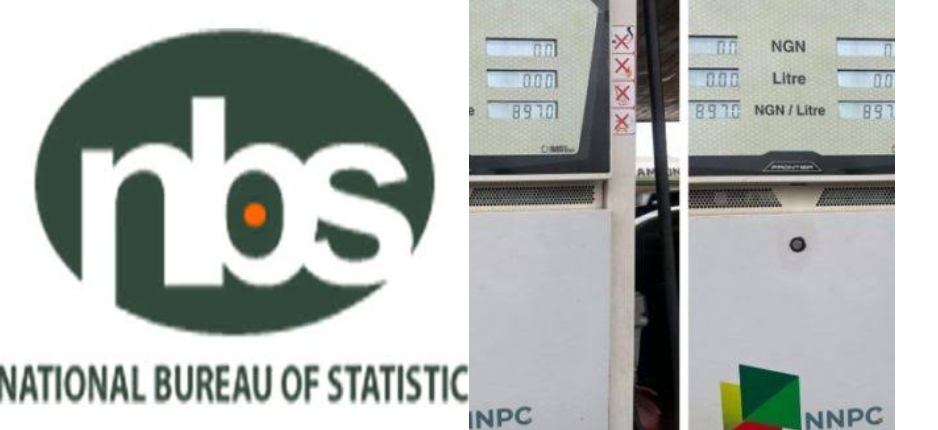
The National Bureau of Statistics (NBS) has released its Petrol Price Watch report for September 2024, revealing a sharp rise in the average retail price of Premium Motor Spirit (Petrol) across Nigeria.
According to the report published on Friday, the average price paid by consumers surged to N1,030.46 per litre, reflecting a dramatic 64.55% increase from September 2023, when the price stood at N626.21.
This spike in petrol prices represents a significant month-on-month increase of 24.08% compared to August 2024, when the average price was recorded at N830.46 per litre.
The report, based on data meticulously gathered from over 10,000 respondents across 774 local government areas in all 36 states and the Federal Capital Territory (FCT), Abuja, provides a comprehensive overview of the impact of rising fuel prices across the nation.
The data collection process was carried out by a dedicated team of more than 700 NBS personnel, with strict quality control measures in place to ensure the accuracy and reliability of the information.
"This extensive data collection reflects our commitment to providing accurate and timely information to inform public policy and consumer decisions," the NBS stated in its report.
The state-by-state analysis showed that Katsina recorded the highest average petrol price in the country at N1,096.15 per litre, followed closely by Ebonyi at N1,090.94 and Akwa Ibom at N1,085.71.
On the other hand, Yobe, Sokoto, and Kebbi recorded the lowest prices at N939.38, N961.67, and N986.67, respectively.
The NBS report emphasized the variation in petrol prices across different regions, noting that the North-West Zone had the highest average price at N1,036.52, while the North-East Zone reported the lowest at N1,014.55.
“The variation in prices across states highlights the complexities within our fuel distribution network and the need for effective management strategies,” the report added.
Economists are expressing concern over the implications of the soaring fuel prices on the economy. “Rising fuel costs directly impact transportation and goods prices, leading to a ripple effect throughout the economy,” said one economic analyst. "Strategic policy interventions are necessary to stabilize fuel costs and alleviate the financial strain on Nigerians."
As fuel prices continue to rise, the report underscores the urgent need for action to address the mounting challenges facing Nigeria’s fuel market amid broader economic pressures.