


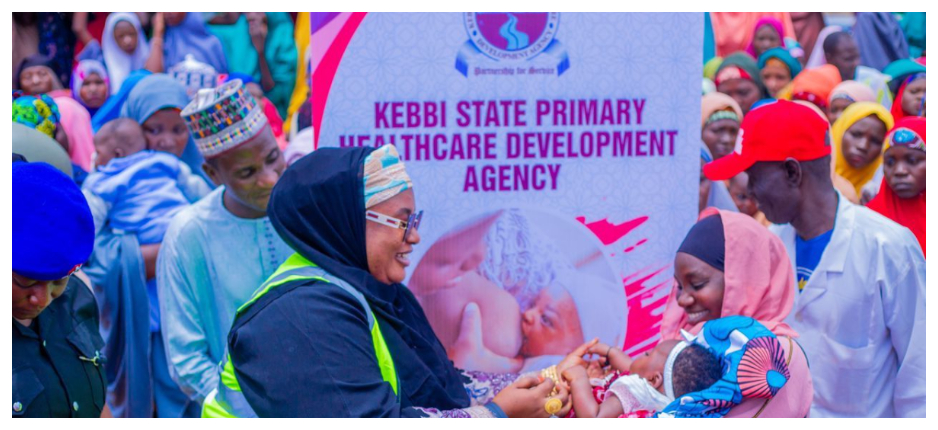
As part of efforts to equip Health workers in Kebbi, the Federal Ministry of Health, in collaboration with the Kebbi State Primary Healthcare Development Agency (KBSPHCDA), trained 45 local government Primary Healthcare Workers on Maternal, Infant, And Young Child Nutrition (MIYCN) courtesy of the Nutrition International.
At the opening of the 7-day training course, which being held at the Conference Hall of Kamba Annex Motel in Birnin Kebbi metropolis, the Kebbi State Coordinator of Nutrition International, Babatunde Lawani, disclosed that the participants were drawn from six local government areas of the State, which includes Birnin Kebbi, Argungu, Augie, Bunza, Maiyama, and Gwandu.
Lawani further said that Nutrition International has given the state the opportunity to provide a step-down training course to health workers in the benefitting local government areas on Maternal, Infant and Young Child Nutrition.
According to him, Nutrition International which has its headquarters in Canada, and 10 country offices in Africa including Nigeria has many projects across the Northwest and Northeast zones of Nigeria which comprises Jigawa, Kano, Yobe, Sokoto, Katsina, Kebbi.and Bauchi states.
He said they are supporting the state to implement three projects which are aimed at improving maternal and child health.
“We are also working with the Kebbi State government to ensure that many hospitals are available for the accessibility of pregnant women and the new-born babies,” he added.
Training staff is important in Health and social care to ensure the safety of people receiving and giving care and to maintain high standards of care quality.
Training care staff helps engrain the necessary behaviors, attitudes, skills and knowledge to deliver high-quality, safe, person centered care. It helps them take the right steps to prevent risk occurring and prepares them to respond correctly should a risk emerge in the course of delivering care. This helps keep everyone safe from harm.
Without the right training there is more chance something (minor or major) could go wrong. This could put people at serious risk of harm. Training staff to understand how to communicate more effectively, to manage people who have behavioral difficulties and how to work towards their personal outcomes are just some examples of how the right training regime boost care quality, for individuals and across care services.
Read also