


A repentant female Boko Haram member, identified as Fatima Musa who went through what is referred to as deradicalisation and resettled in Mafa Local Government Area of Borno, has said she regrets shredding into pieces her National Certificate in Education.
Deradicalisation refers to a process of encouraging a person with extreme political, social or religious views to adopt more moderate positions on the issues.
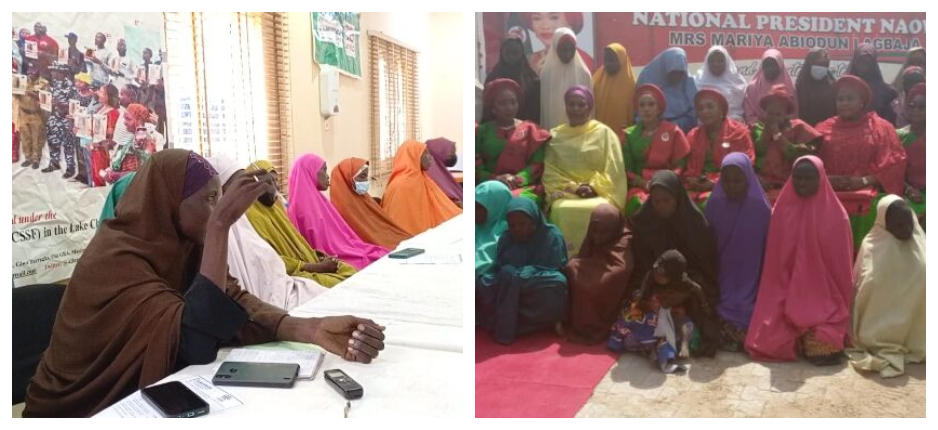
Musa made this known in Maiduguri on Tuesday, 03 September, 2024 to News Agency of Nigeria (NAN) during a community dialogue on understanding, tolerance and peaceful coexistence organised for the repentants and community leaders of Mafa.
It was learnt that a community-based NGO, Allamin Foundation with support from the British Government under the UKaid, organised the dialogue.
Musa, who was deracialised with other repentant women by the foundation, said many of them joined the insurgency at a young age after they were misled.
“We were misled as young people through the use of religion and later discovered that we went the wrong way after we were deradicalised by the foundation.
”We met with clerics who put us on the right track regarding Islam. We are now mature and more knowledgeable on Islam and the teachings of the Holy Prophet that promote peace and tolerance.
“I regret tearing my NCE certificate up when I made the mistake of accepting the twisted ideology that Western education was Haram.
“One of my prayers for now is to reach out to my father, who is now in a neighbouring country to beg for his forgiveness for joining the sect against his wish,” she said.
Another female, Bintu by name, who also went through the process, pleaded for forgiveness from the people of Mafa and urged for support to the foundation to reach out to more women and men in the bush.
She noted that a few cases of some repentants returning to the bush had to do with stigma and harassment by some people, telling them that they were doomed for hellfire fire in spite of their repentance.
“If you keep telling people they are doomed, they’ll say since there’s no forgiveness, they had better go back and continue.
“Some of the surrendered have easy money and others loot in the bush. They are struggling for survival with other citizens in their communities.
“Such repentants need to be encouraged to start a new life to sustain it,” Bintu said.
Some residents of Mafa who also spoke to NAN at the meeting, pleaded with the government to do more on the deradicalisation and resettlement process through more empowerment support to victims and those that repented in line with transitional Justice.
Babagana Butu, community leader of the Civilian Joint Task Force in Mafa, narrated that its members now include some of the repentant insurgents.
”We patrol the area together. We provided them with farmlands to cultivate like everyone as part of the reintegration process.
“We want the government to also remember them in its empowerment programmes to enable them to sustain themselves and their families as well as contribute positively to the society,” Butu said.
In her remarks, the Executive Director of the foundation, Hajiya Hamsatu Allamin, said the dialogue was organised to discuss issues arising from the reintegration process and the way forward regarding challenges faced.