



The economic downturn and political instability in Nigeria have taken a devastating toll on families, pushing many to the brink of breakdown. Financial difficulties, unemployment, and insecurity have become pervasive, eroding the foundations of marriage and family life.
As families struggle to make ends meet, relationships are strained, and the institution of marriage is increasingly at risk. Urgent attention is needed to address the root causes of these challenges and provide support for vulnerable families.
The unyielding grasp of poverty continues to suffocate Nigerian families, crushing their aspirations and diminishing their dignity. Rampant unemployment and skyrocketing inflation have turned daily survival into a desperate quest.
Parents, overwhelmed by the pressure to provide, often succumb to stress and frustration, creating a toxic atmosphere that affects their children's well-being. The relentless struggle to make ends meet erodes emotional bonds, leading to detachment and irrational decision-making.
Many families are struggling to find a way forward or make progress due to the leadership's negative impacts, which has severely hindered opportunities for advancement. As a result, many have opted to return to rural areas, unable to manage the costs of city living. Numerous families in Nigeria are at a financial crossroad; basic necessities are out of reach, and caring for the sick and elderly has become increasingly burdensome.
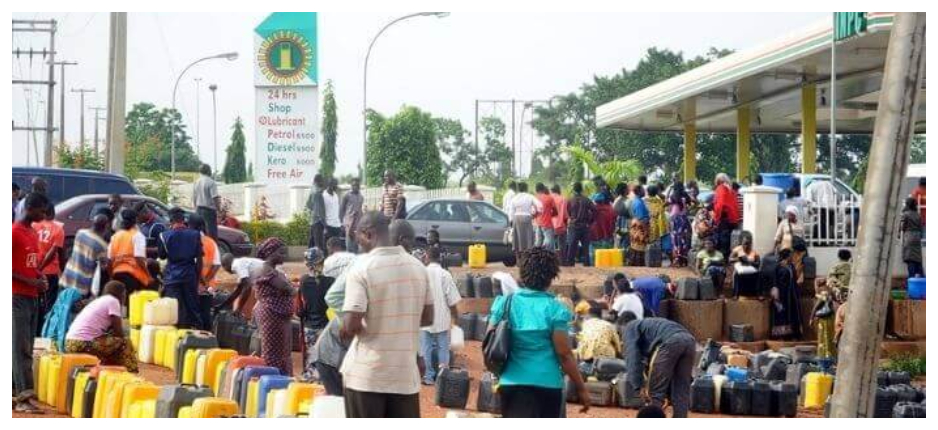 Couples are finding it increasingly difficult to tolerate one another due to the financial strains and scarcity they are enduring. The mounting economic pressures have intensified stress and conflict within the relationship, eroding patience and understanding. Financial burdens, such as rising living costs and stagnant incomes, exacerbate tensions, making it challenging for couples to maintain harmony. As they struggle to meet basic needs and cope with economic uncertainty, these stresses often lead to frequent arguments and emotional distance, pushing relationships to the brink.
While the President, Senators, Governors and their families enjoy their privileged lives, the less fortunate suffer. The political elite not only make plans to accumulate wealth but also embezzle public funds, further impoverishing the masses.
The family is often considered the cornerstone of society, serving as the fundamental unit where values, norms, and behaviors are first learned and developed. As such, many societal issues can be traced back to the dynamics within families. When family relationships are strained or dysfunctional, it can lead to broader social problems such as increased crime rates, poor educational outcomes, and diminished community cohesion.
Economic mismanagement and instability in Nigeria have placed undue stress on families, leading to increased hardship, suffering, and conflict even among those who are otherwise loving and peaceful.
The removal of fuel subsidy has plunged numerous families into severe financial distress, compounded by soaring inflation. This perfect storm of economic pressure has spawned widespread regret, anxiety, and worry among parents. The financial strain transcends basic necessities like school fees and healthcare, leaving many Nigerian parents on edge. Research underscores the profound psychosomatic consequences of prolonged stress, affecting both physical and mental well-being.
Clearly, over 20% of Nigerians earn less than ₦50,000 a month, which helps explain the high rates of violence, breakups, anger, and hatred in many families. Some young couples have left their partners in search of better opportunities abroad, while others have had to pull their children out of school. Consequently, the modern Nigerian family structure has evolved, with an increase in single parenting, separation, divorce, and complex family dynamics like baby-daddy and baby-mama situations.
As couples grapple with unmet needs, children may turn to immediate gratification, leading to a decline in respect for elders, involvement in illicit drug intake, participation in fraudulent activities, etc.
In an interview with our correspondent in Umuahia, Abia State, Madam Chinemelum, a married woman, trader, and mother of three, discussed how the country's economic difficulties have altered her family's peace.
“My husband and I almost got separated over how we were dividing our financial responsibilities. One night, he told me that we needed to split family duties 50/50. He acknowledged my efforts but said I needed to do more. I told him that instead of dividing responsibilities, we should focus on working together to get through the hardship. He reacted angrily, shouting and nearly resorting to physical violence until I pleaded with him.
“Since then, our relationship has been marked by constant arguments and shouting. Although we've managed to calm down somewhat, we now just exchange greetings and nothing more.” she said.
Uche, a generator engineer, living in Umuafai, a community in Umuahia, also shared his experiences regarding his family.
“My family and I used to live in a two-bedroom flat, but as our financial situation worsened, I struggled to pay the rent. Eventually, we had to move into a one-room apartment. The arguments with my wife began because the space was too cramped for us all.
“She insisted that we needed a one-bedroom flat instead, but I assured her that we would move back to a two-bedroom place once our circumstances improved. She agreed at the time, but around June, she began complaining again, which has created tension in our family.”
Similar, and often worse, issues are increasingly affecting the average Nigerian family today.
For many, simply eating, drinking, and finding joy in life feels like a miracle amidst these challenges. The widespread dissatisfaction with jobs that can't cover basic expenses, combined with low patronage for skilled artisans, fuels ongoing frustration and strife.
Despite the Nigerian government’s frequent promises of waivers, education grants, and reassurances, while appearing well-intentioned, have not effectively alleviated the hardships faced by impoverished citizens. The government's insincerity and political maneuvering only exacerbate problems like insurgency, ethnic conflict, insecurity, inflation, and unemployment. The lack of subsidies and high exchange rates further hinder efforts to improve the lives of ordinary people. In this scenario, leaders revel in their success while citizens continue to suffer, and malevolence persists.
Also Read: Abia Govt Detains Engineer, Manager For Road Damage.
The Nigerian government lack the competence, empathy, capability, and governing principle to rule or make life better for the common man.
For a home to truly thrive, love must be at its core, but poverty can undermine this foundation. Homes built only on attraction or lust are likely to be unstable. True love, which is crucial for family cohesion, involves loyalty, respect, and empathy, and demands a deep commitment from all family members. However, sustaining this commitment becomes difficult amid persistent hardship and scarcity.