


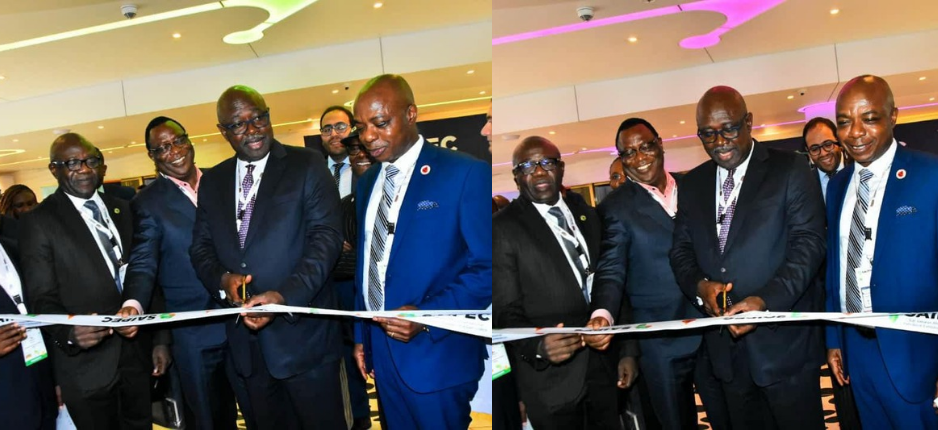
The Executive Secretary of the Nigerian Content Development and Monitoring Board (NCDMB), Engr. Felix Omatsola Ogbe, has urged sub-Saharan African nations to adopt a unified approach to local content development, industrialization, and economic growth.
This was disclosed by the Corporate Communications department of NCDMB in a statement made available to journalists in Bayelsa State.
Speaking at the 9th Sub-Saharan Africa International Petroleum Exhibition and Conference (SAIPEC) in Lagos on Tuesday, Engr. Ogbe emphasized the importance of keeping pace with global oil and gas industry trends while fostering stronger regional collaboration.
In his keynote address, he acknowledged the progress made by countries such as Nigeria, Angola, and Ghana in boosting indigenous participation in the petroleum sector. However, he expressed concern over the fragmented implementation of local content policies, which he believes hampers collective growth across the continent. “We must align our strategies and foster collaboration to enhance the competitiveness of indigenous players in the global oil and gas industry,” he stated.
Presenting a paper titled *“Sub-Saharan Africa Local Content Collaboration Strategy,”* Engr. Ogbe outlined five key pillars crucial to fostering cooperation: harmonization of local content policies, human capital development, investment in infrastructure, funding for local companies, and technology transfer. He stressed the need for a well-structured regional framework to position Africa for long-term economic prosperity, urging stronger partnerships through organizations such as the African Petroleum Producers Organization (APPO), the United Nations Economic Commission for Africa (UNECA), and the African Union (AU).
The Executive Secretary also emphasised the potential of the African Continental Free Trade Agreement (AfCFTA) in facilitating cross-border collaboration. He noted that with AfCFTA integrating 1.3 billion people across 54 countries, its $3 trillion combined GDP offers a significant platform for strengthening local content strategies and expanding trade among African nations.
Also, in highlighting the role of infrastructure in driving regional economic growth, Engr. Ogbe cited the Dangote Integrated Refinery and Petrochemical Company as a prime example of a project that can enhance intra-African partnerships. He also mentioned other notable developments such as Kenya’s Konza Technology City, the Grand Ethiopian Renaissance Dam, Lekki Free Trade Zone in Lagos, and the SHI-MCI FPSO Fabrication/Integration Yard. The NCDMB’s Nigerian Oil and Gas Parks Scheme (NOGAPS), currently being developed in seven locations, was also presented as an opportunity for investors to manufacture industry-related equipment and components.
On human capital development, Engr. Ogbe described Africa’s youthful population—where approximately 60% are under the age of 25—as a unique advantage for fast-tracking industrialization. “A large, young workforce can drive productivity, innovation, and sustainable economic expansion,” he remarked, advocating for skills development programmes that align with industry needs.
However, Addressing the critical need for financing indigenous firms, the NCDMB boss proposed the creation of a regional financial framework that provides credit facilities, guarantees, and investment incentives. He commended APPO’s efforts in establishing an African Energy Bank, in which NCDMB has taken equity investment, and expressed optimism that it would soon become operational.
Engr. Ogbe On technology transfer, emphasized the importance of fostering joint ventures, research collaborations, and knowledge-sharing agreements. “Encouraging technological exchange among African nations will enhance indigenous innovation and strengthen our collective capacity to develop homegrown solutions,” he said.
He also highlighted the role of academic institutions and research bodies in driving industry-led innovations. “By aligning research with industrial needs, we can build a self-sustaining petroleum sector that delivers long-term benefits for African economies, businesses, and citizens,” he concluded.