


Nigeria's economy is poised for a transformative boost, with a massive N589 billion (£1.2 billion) investment slated for critical sectors.
This follows the historic signing of eight partnership agreements between Nigeria and the United Kingdom, marking a significant milestone in their collaborative efforts.
This substantial investment is expected to catalyze economic growth, drive development, and fortify key industries, setting the stage for a more prosperous and resilient economic future.
The Ministry of Budget and Economic Planning disclosed this in a statement on Thursday , 12 September 2024, in Abuja.
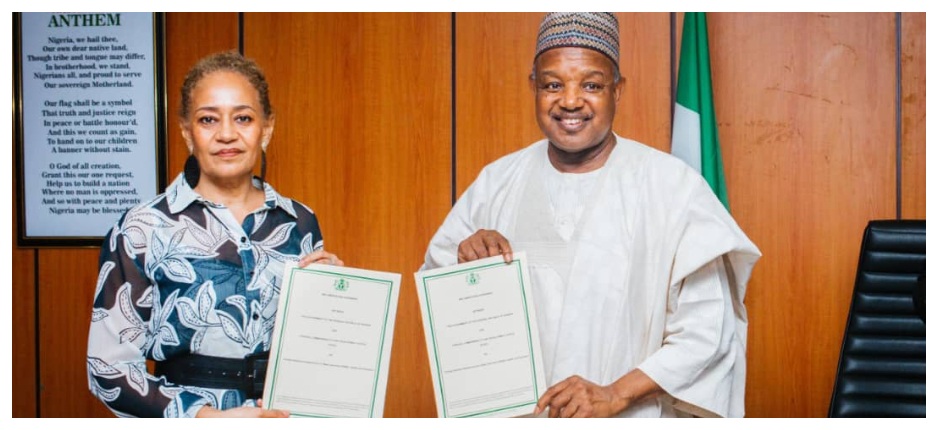
During the signing of the programme implementation agreements, both Ms. Cynthia Rowe, UK Charge d' Affaires, and Senator Abubakar Bagudu, Minister of Budget and Economic Planning, reaffirmed their commitment to a strong partnership between the two nations.
They pledged to collaborate closely in critical areas, including governance, healthcare, education, and economic development, driving progress and prosperity for both countries.
Bagudu welcomed Rowe and her team to the signing ceremony at the ministry’s Abuja headquarters.
While thanking the UK government for its support, he called it a noteworthy display of friendship.
According to the senator, the timing of the implementation agreement, was important considering the global economic downturn.
“Many economies in the world are going through turbulent times. Nigeria and the UK are not exceptions,” he stated.
Senator Bagudu, commended the UK's exemplary spirit of partnership, which has enabled it to extend support to other nations despite its own economic challenges. He highlighted that certain agreements would have far-reaching benefits, extending beyond Nigeria's borders, as they address pressing global issues that require collective action.
He added “Health is no longer a local issue. COVID-19 reminded us that we have a shared universe. Climate is a universal phenomenon. Governance is no longer a local issue. Governance failure in one country can affect other countries through forced migration, conflict, or the spread of arms,”.
The minister spoke about President Bola Tinubu’s administration’s recent economic reforms, which he regretted had caused some discomfort among the people.
He clarified, though, that they were a component of the Renewed Hope Agenda’s macroeconomic stability strategies, which would encourage domestic and foreign investment necessary for the country’s economic growth, development, and revival.
The senator emphasised that the accords acknowledged the possibility that, despite a nation’s best efforts, it might not have all the resources required to meet its developmental needs. He also stated that Nigeria was certain that, with cooperative partners, it would overcome its obstacles.
Recall that President Bola Tinubu had on Wednesday visited King Charles III in London at Buckingham Palace for a private meeting.
A statement signed by Bayo OnanugaSpecial Adviser on Information and Strategy disclosed that both leaders discussed global and regional matters of shared priority, focusing on the urgent and complex challenge of climate change.