

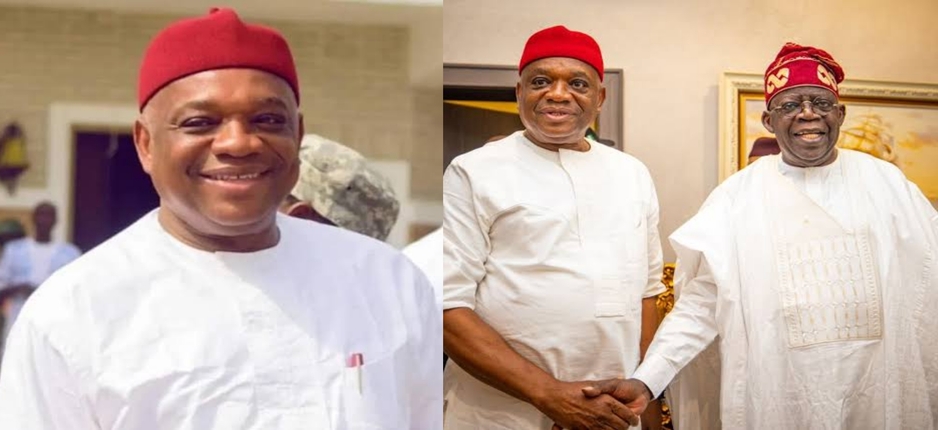
The Chairman of the Senate Committee on Privatisation, Orji Uzor Kalu, has lauded President Bola Tinubu’s bold economic decisions, particularly his refusal to conform to the policies suggested by international financial bodies like the World Bank and the International Monetary Fund (IMF). Kalu’s comments, which were made during a visit to the Arochukwu Local Government area in Abia State, highlighted the positive impacts of the President’s domestic-focused reforms, which he believes are steering Nigeria toward sustainable growth.
Kalu, who represents Abia North in the Senate, expressed his strong support for the recent decision by the Tinubu administration to overhaul the Port Harcourt and Warri refineries. This move, according to Kalu, signals a clear break from traditional economic strategies dictated by external institutions. He went on to emphasize the significance of other policy changes introduced by the President, such as the liberalization of Nigeria’s foreign exchange system, the deregulation of the downstream petroleum sector, and crucial tax reforms. These policies, Kalu argued, will pave the way for long-term economic stability and growth, aligning Nigeria’s future with its unique challenges and resources.
The senator praised Tinubu for his approach to solving Nigeria’s economic issues from within, emphasizing that the country’s development requires solutions tailored to its own circumstances. Kalu stated, "The economic challenges we face are largely homegrown, and the solutions must reflect that reality. President Tinubu’s reforms have already begun to yield tangible results. The stability of the exchange rate, for example, is a clear indication that the President’s approach is working, even in the face of pressure from international financial institutions."
One of the most notable reforms Kalu singled out was the removal of the fuel subsidy, a step that had been repeatedly avoided by previous administrations, including that of former President Olusegun Obasanjo. He suggested that such decisive measures are vital for Nigeria’s economic independence. “By eliminating the subsidy and merging the exchange rates, President Tinubu is taking the necessary steps that previous leaders hesitated to take,” Kalu remarked. "These bold decisions may have been difficult, but they are crucial for Nigeria’s progress.”
Kalu further emphasized that Nigeria must not blindly follow the advice of the World Bank and IMF. He criticized the one-size-fits-all economic strategies often prescribed by these institutions, arguing that they fail to account for the specific challenges faced by developing nations like Nigeria. Instead, he advocated for "homegrown policies" that are better suited to the country’s unique needs.
In support of his argument, Kalu pointed to the recent decline in petrol prices as a sign that the President’s economic reforms are beginning to have a positive effect on the country’s financial landscape. He expressed confidence that, as the reforms continue to take root, other goods and services will also see price reductions, leading to greater economic stability and improved quality of life for Nigerians.