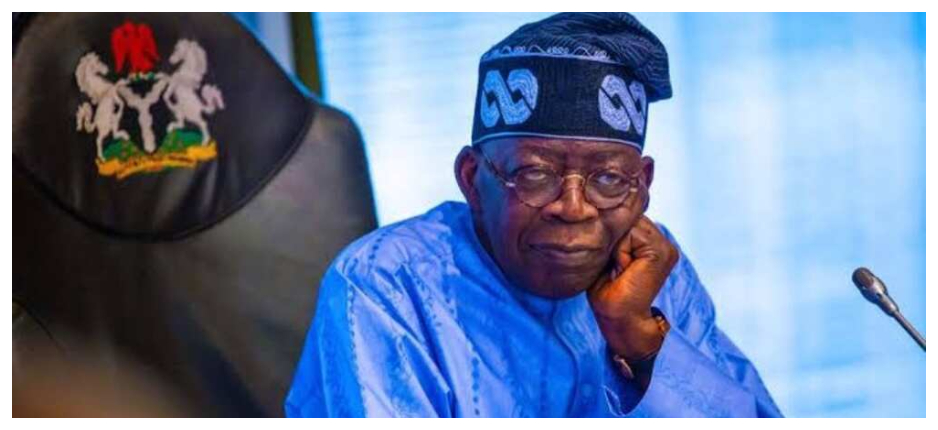


Reports shows that the Federal Government, under the leadership of President Bola Tinubu, has obtained loans worth $6.45bn from the World Bank in the last 16 months.
This current figure follows the recent approval of three new loans totalling $1.57bn from the World Bank for various projects in the country and is expected to increase further in the coming months.
This was as the world apex bank approved no fewer than 36 loan requests to the Federal Government, coming to a substantial sum total of $24.088bn just within five years.
Reasons for these loans include some of the projects under Tinubu interests such as power ($750 million), women empowerment ($500 million), girl’s education ($700 million), renewable energy ($750 million), economic stabilization reforms ($1.5 billion) and resource mobilization reforms ($750 million).
These loans aims to further aid in financing various developmental projects across the country, alongside increasing concerns about the country’s escalating debt profile.
Meanwhile, according to an analysis of documents obtained from the international lender website on Tuesday, the international lender has maintained an annual credit approval to the nation since 2020.
A good look showed that the lender approved 15 loan requests worth $6.36bn in 2020.
Projects approved for the loan include the Nigeria Rural Access and Agricultural Marketing Project with an approved project commitment of $510m, The Nigeria Digital Identification for Development project ($430m), and $750m for the Nigeria SATAN additional financing for COVID-19 response, amongst several others.
Before now, specifically in 2021, the loan requests were reduced to six projects worth $3.2bn while the nation, under the administration of former president Mohammadu Buhari, secured loans worth $1.26bn in 2022 for six projects.
A $500m loan request was approved for a livestock productivity and resilience support project on March 18, 2022 and another loan of $750m was approved under the Nigeria: State Action on Business Enabling Reforms Program in the same year.
Another $3.9m was obtained for the Umbrella organisation to support Nigeria for women’s projects.
The world bank has approved $3.82bn already in 2024 for five projects, which include a grant of $70 million.
This implies that the loan amount was $3.75bn so far in 2024, with more credit facilities expected before the end of this year.
The World Bank has approved a series of loans to Nigeria, strategically targeting critical sectors such as mobilization, adolescent girls’ education, economic reforms, resource , and renewable energy expansion.
Recall that on June 13, the World Bank announced the approval of two loan projects aimed at boosting Nigeria’s economic stability and supporting its vulnerable populace.
According to a statement from the bank, the combined package, totalling $2.25bn, comprises the $1.5bn Nigeria Reforms for Economic Stabilization to Enable Transformation Development Policy Financing Program and the $750m, driving Resource Mobilization Reforms Program-for-Results.
The world bank has already received $751.88m of the $1.5bn under the Nigeria Reforms for Economic Stabilization to Enable Transformation.
The World Bank is expected to approve another loan request worth $500m by December 16, 2024, for the Rural Access and Agricultural Marketing Project – Scale Up project.
The statement read thus, “The World Bank has today approved three operations for a total of $1.57bn to support the Government of Nigeria in strengthening human capital through better health for women, children and adolescents and building resilience to the effects of climate change such as floods and droughts through improving dam safety and irrigation.”
The international lender stated that this new financing includes $500m for addressing governance issues that constrain the delivery of education and health, $570m for the Primary Healthcare Provision Strengthening Programme and $500m for the Sustainable Power and Irrigation for Nigeria Project.
“The HOPE-GOV and HOPE-PHC programmes combined will support the Government of Nigeria to improve service delivery in the basic education and primary healthcare sectors which are critical towards improving Nigeria’s human capital outcomes.
“The SPIN project will support the improvement of dams’ safety and management of water resources for hydropower and irrigation in selected areas of Nigeria.
“The HOPE-GOV Programme will support Nigeria to address underlying governance weaknesses in the systems and procedures of government in two key human development sectors,”